
Many B2B companies waste time and money chasing the wrong customers, sending messages that never connect. It's frustrating and leaves your team tired and your goals out of reach.
It only gets tougher when you realise your product or service isn't landing where you expected. You might spend weeks reaching out, booking calls, or launching adverts, but there's little to show for it. Missed targets hurt morale.
Learning how build your Ideal Customer Profile (ICP) will change everything.
In this article, we'll walk you through clear, practical steps to identify who actually needs your offer and how you can reach them faster, helping your business grow with less guesswork and more results.
Key Takeaways
- ICP creates a clear picture of your best-fit customers, focusing on data like industry, company size, buying needs, and preferred channels.
- B2B profiles centre on entire companies — industry, budgets, and buying roles — while B2C profiles focus on individual habits, interests, and quick personal choices.
- A strong ICP boosts your marketing focus, aligns your teams, and helps pick the businesses most likely to buy, leading to higher win rates and longer, more profitable customer relationships.
- Up to half of your leads may not be a good fit; companies with a defined ICP see higher win rates and enjoy long-term client loyalty.
- Building your B2B ICP involves these steps: define who they are, what they need, where they hang out, their location, and why they buy.
- Rebuilding an ICP means studying your best customers, using CRM and data, talking to clients, updating for market shifts, and sharing updates across all teams for company-wide alignment.
- Startups can craft a first ICP by making educated guesses, studying competitors, running interviews or surveys, picking a niche group to target, and testing or updating with real feedback as they grow.
What Is an Ideal Customer Profile in B2B?
In the B2B context, an Ideal Customer Profile or ICP is a clear, detailed description of the kind of business or company that gets the most value from what you offer. Basically, you create ideal companies that should buy your product or service, rather than just anyone who might be interested or the total addressable market (TAM).
An ICP describes companies (not individuals) and is created using real data and facts, and a solid one points to companies that are most likely to buy from you, stick around longer, and bring in the most profit.
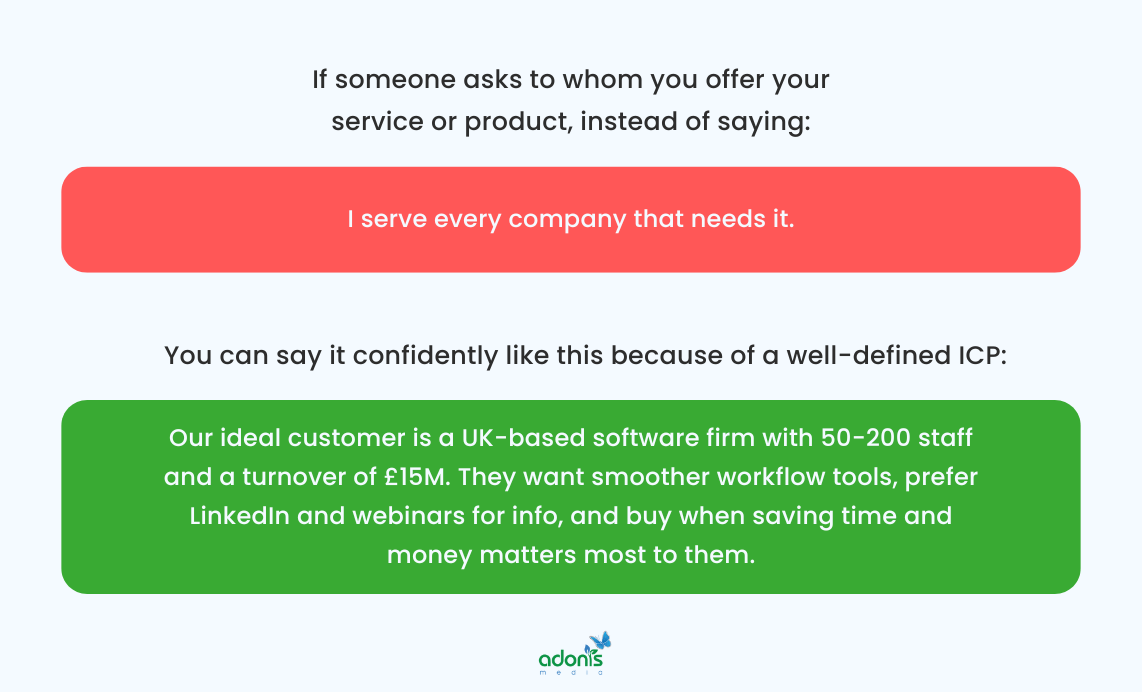
Trying to sell to everyone can create a lot of confusion and wasted effort. It makes it hard to focus on your marketing and sales, and you might end up chasing leads who don't need or want your product.
A strong ICP helps everyone in your team know who to target: marketing will send the right message to the right companies., sales won't waste time on leads that will never buy, and support teams can plan for the needs of your best-fit customers.
Over time, as your company grows, you can update your ICP using new data to make sure you focus on those businesses that matter most.
B2C vs B2B Customer Profiles
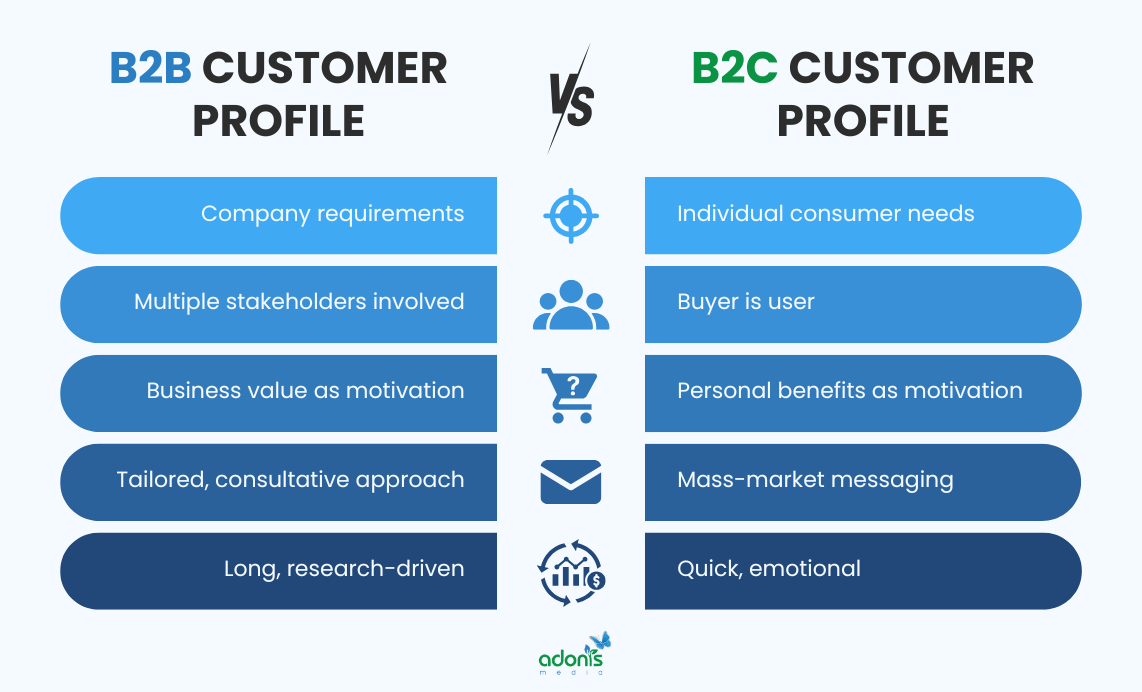
B2C and B2B customer profiles are very different.
For B2C, the profile is about an individual person. You look at things like their age, interests, shopping habits, and lifestyle. B2C buyers are usually shopping for themselves and make quick choices, often based on personal likes or feelings.
In B2B, everything centres on a business, not a person. Here, you look at the company's industry, team size, yearly budget, and who's involved in the buying decisions. B2B customers often have more than one decision-maker, and their buying process generally takes longer.
In short:
- B2C profiles: people and their habits
- B2B profiles: businesses and how they work
If you use both types of profiles the same way, you'll likely waste time and money. With a well-defined ICP, your team targets the right businesses, builds better relationships, and grows sustainably.
Why ICP Matters in B2B Marketing and Sales
Knowing exactly who your ideal customer is makes a big difference in B2B. With a clear ICP, teams can focus on the right businesses, save time, and make smarter decisions that help the company grow.
ICP Helps You Identify Best-Fit Customers
When you have an ICP, you don't waste time chasing every lead. You target only the companies that truly need what you offer. Research shows that at least 50% of your prospects are not ideal or suitable for what you sell.
Focusing on best-fit customers increases your win rates. Organisations with a strong ICP see a 68% higher rate of won deals compared to those without. These high-fit customers buy more and stay with your business longer, making every sale more valuable.
A strong ICP also keeps your sales pipeline healthy. Instead of having lots of 'maybe' leads, you fill your pipeline with customers who are more likely to say yes.
ICP Encourages Teamwork Between Marketing and Sales
Having a shared ICP brings sales and marketing together. When both teams know exactly who to go after, they can work as one.
Sales and marketing working together helps companies increase their sales win rates by up to 38%. No more finger-pointing; everyone works with the same goal.
Additionally, companies with tightly aligned marketing and sales teams make 24% more revenue and see much larger profits over three years. This shows that sharing a target customer profile is good for business growth.
ICP Increases Customer Loyalty and Lowers Churn
When customers are a perfect fit, they stick around. Just a 5% boost in retention can grow profits by 25-95% for B2B companies. Loyal customers bring more predictable, stable revenue.
ICP also helps reduce churn. When you work with best-fit customers, they're less likely to leave. B2B businesses with strong retention enjoy more sustainable growth and don't have to spend as much chasing new customers all the time.
ICP Maximises Efficiency and Cost Savings
A well-defined ICP saves money by letting you zero in on the right targets. Instead of spreading your marketing budget thin, you invest in the channels and content that your best customers engage with.
It also means your teams won't waste hours on unqualified prospects or fixing avoidable mistakes. Streamlined operations, thanks to an ICP, help you get better results for less spend, freeing up resources for growth.
What to Include in Your Ideal B2B Customer Profile
Getting your ICP right means fewer wasted leads, clearer marketing messages, and a sales team that works smarter, not harder. Each part of your ICP shows you where to focus and helps you talk to the right companies at the right time.
Let's break down the key pieces your profile needs.
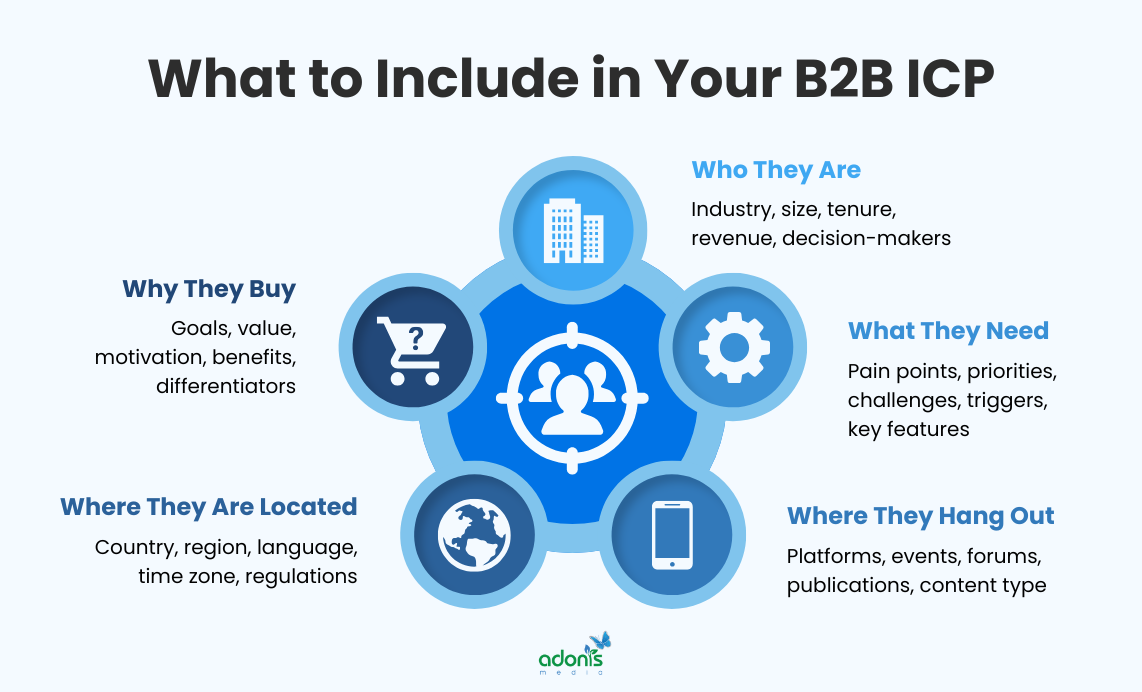
Who They Are
Start with the basics. This covers things like firmographics or the details about the business itself. The company size, years in operation, what industry they're in, and even the job titles of the decision-makers.
Understand who's likely to make the purchase. In B2B, it's rarely just one person. It could be the CEO, an IT manager, or even a buying committee. Knowing who's involved helps you plan your approach and create messages that feel personalised and sharp.
If you only go after 'similar' businesses, you risk missing out on great matches outside your comfort zone. But with clear firmographic targets, it's much easier to scale your outreach and keep your pipeline healthy.
Ask yourself:
- What industry does their company belong to?
- How many employees do they have?
- What is their approximate annual revenue?
- How long have they been operating?
- Which job titles or departments help decide on purchases?
What They Need
Dig into their challenges. This is all about the pain points and problems your ideal customers face daily. These are the areas where your product or service adds real value.
Pain points could be slow processes, high costs, poor productivity, or trouble keeping up with rules and regulations. Priorities shift as well, and sometimes it's about innovation, sometimes it's stability. Knowing their buying triggers, like the launch of a new project or a policy change, shows you when to reach out.
Ask yourself:
- What challenges or problems do they struggle with?
- What goals do they want to reach this year?
- Which issues slow their business down?
- What triggers them to search for new solutions?
- Which features or services do they care about most?
Where They Hang Out
Check also for the spaces and channels your ideal customer visits for industry news, tips, or supplier research. It could be LinkedIn, web forums, professional groups, trade events, or even specific webinars.
Knowing their favoured spots helps you show up where they already spend time. It might also include journals, podcasts, or trade groups. Meeting customers in their preferred places means less wasted effort and gives you a better chance to be heard.
Picking the right channels for your marketing campaigns saves budget and also lets you tailor your content so it feels familiar and relevant to your target customers.
Ask yourself:
- What social media or online networks do they use for business?
- Do they attend trade events, webinars, or conferences?
- Where do they go for research or product reviews?
- Do they read certain industry magazines, blogs, or newsletters?
- Which type of content (like video, podcast, articles) do they prefer most?
Where They Are Located
Location matters in B2B. It can be their region, city, or even country. Some products or services work better in certain markets, and local rules or ways of doing business can change how you approach a sale.
For example, language needs, shipping times, taxes, or policies might affect what the customer expects. Sometimes, being in the same time zone is key to providing top support. Knowing the location up front lets you focus your resources on the places where you can deliver the most value.
Ask yourself:
- Which countries or regions do you want to target?
- Are your products or services a fit for all locations, or just some?
- Do these locations have extra rules, licenses, or taxes to consider?
- Will you need to provide support in their local language?
- Are there any time zones, climates, or other local factors to think about?
Why They Buy
Finally, find out why they buy, and for this, you need to dig into both the practical and emotional drivers.
Practical reasons could be saving time, reducing costs, or improving results. But don't forget the softer side. Maybe your customers want peace of mind, want to be seen as leaders in their field, or want easier workdays.
When you understand their true motivations, your sales and marketing efforts speak to both their minds and hearts. You move beyond just 'features' and start showing how your solution makes their job easier or their business stronger.
Ask yourself:
- What practical goals are they hoping to reach?
- Are there emotional motivators, like wanting to look good to their team?
- What makes your offering stand out to them?
- Why would they pick you over a competitor?
- Which results or benefits matter most in their day-to-day work?
When all of these come together, you get a clear picture of your ideal customer. Like the example earlier, here's how your ICP might look in practice:
"Our ideal customer is a UK-based software firm with 50-200 staff and a turnover of £15M. They want smoother workflow tools, prefer LinkedIn and webinars for info, and buy when saving time and money matters most to them."
This is just a broad example of an ICP. But by answering those questions above, you can make a very specific one.
How to Rebuild and Validate Your ICP
If you already have an Ideal Customer Profile (ICP), rebuilding and validating it is a must to ensure you're targeting the best customers for your business. This is not a one-time task, as your ICP should grow as your business and market change.
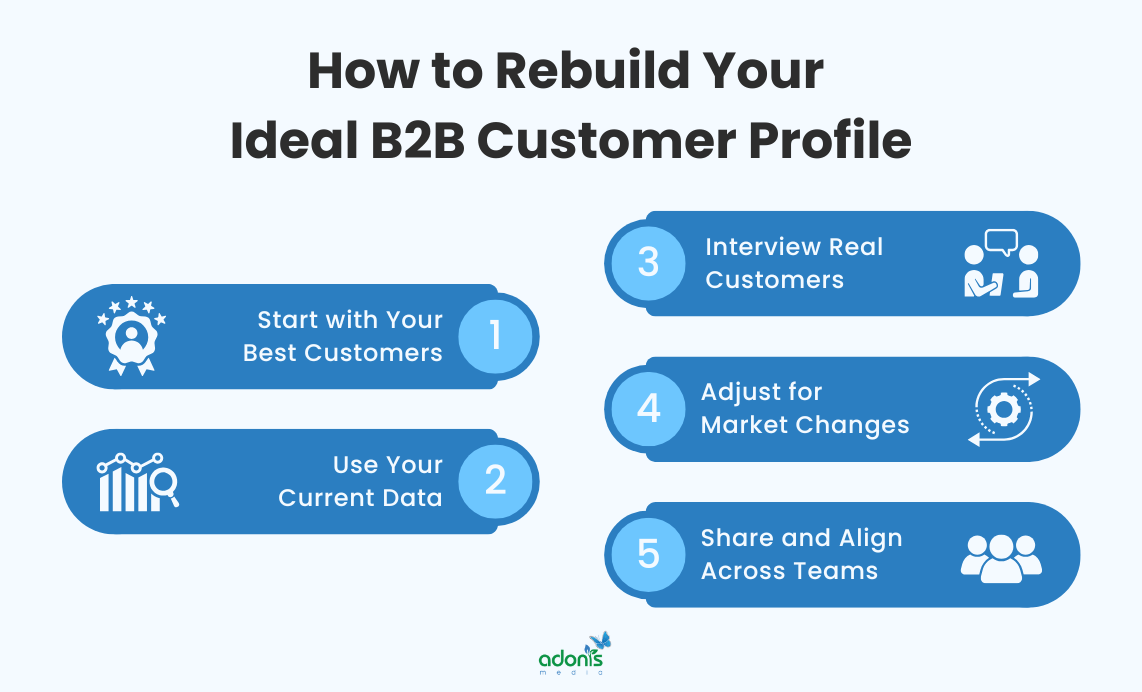
1. Start with Your Best Customers
Focus on your happiest and most loyal customers. Those companies that buy again, renew their deals, and rarely create support headaches. They often pay on time and even refer you to others because they're happy with the product or service. By studying these top customers, you can see clear patterns about what makes an ideal client for your business.
Dig into what they have in common. Look at things like their size, the industry they're in, and how they use your product or service. Check if they spend more, stay longer, or generally have smoother partnerships with you. Seeing these details helps you map out what 'best' or 'ideal' looks like.
Work with data and actual outcomes. Your best customers show you the right direction for your marketing and sales teams, so you don't waste time on the wrong prospects.
2. Use Your Current Data
Your sales and customer records are full of helpful clues. Patterns in company size, region, or order habits can reveal new insights.
Start by tapping into your CRM system. This holds lots of useful info on every prospect and customer: who they are, when they joined, and what they bought. Use it to pull out patterns, like which industries have the most wins or which buyer types convert fastest.
Check your win and loss reports as well. These show which deals close and which ones slip away. Look for things like average deal size and the length of your sales cycle. If the biggest wins come from medium-sized firms, or if certain industries buy faster, update your ICP to match these facts.
Listen to sales feedback and track churn rates. Sales teams often spot early warning signs if a customer isn't a great fit or if deals get stuck. If churn is high with certain customer types, it's a signal that your ICP may need tuning. Use all of these data points together to find the strongest patterns and keep your ICP sharp and helpful.
3. Interview Real Customers
You can also speak directly with your customers to get honest feedback. Sometimes we assume they chose us because we're the most cost-effective option, when in reality, it might be because our product or service fits seamlessly into their process, or for reasons we hadn't even considered.
Ask about their needs, what made them choose you, and what makes them stay. People might share struggles, wins, or even simple wishes you can't see in your CRM.
Talk to newer clients, long-timers, and those who nearly left. You'll get different points of view that can strengthen your ICP. Don't forget your sales and support teams. They see the full customer journey and can spot hidden trends.
Here are some questions to ask in your interviews:
- What challenges led you to try our solution?
- Which features or services do you use most?
- What almost stopped you from buying at first?
- How does our product or team help you do your job?
- Have you ever looked for other solutions? Why or why not?
- What would make you recommend us to others?
You can create more questions that are tailored to your industry and sales cycle. For example, a SaaS company with a long sales cycle might ask customers about how they evaluate new software, what hurdles slow down their buying decisions, or which features they test before committing.
4. Adjust for Market Changes
Once you've reviewed your best customers, dug through your data, and gathered customer feedback, it's time to look outward and spot shifts in your market.
Trends and needs can change quickly. Sometimes, certain industries start buying more, or new technology opens up fresh opportunities. Keep an eye on things like changing regulations, economic shifts, or new competitors, as these can affect who your true best-fit customers are.
Use the insights you've picked up from your reviews and interviews in the earlier steps. If you start seeing new patterns, like more business coming from a growing sector, or feedback that a new feature solves fresh challenges, update your ICP to reflect these.
Remember that your ICP isn't fixed. Keep it under review so it stays matched to the real market, not just what worked in the past.
5. Share and Align Across Teams
Once you update your ICP, everyone in your company should know about it. Get marketing, sales, and even support all on the same page. When every team uses the same profile, you get smoother handoffs and stronger teamwork.
Share notes, run training if needed, and have an open discussion about what the ICP update means. Marketing can build sharper campaigns. Sales can spot the right leads. Support can get ready for new customer types.
If you all work together, you move faster, avoid mixed messages, and make sure your efforts add up. A well-aligned team is quicker to adjust when things change, making your business more resilient and ready for growth.
How to Build ICP for Startups
If you're building a startup and don't have any customers yet, creating your Ideal Customer Profile (ICP) may feel overwhelming. But this is the perfect time to shape your ICP as you grow. You'll be working from smart guesses and real-world feedback until a clearer picture forms.
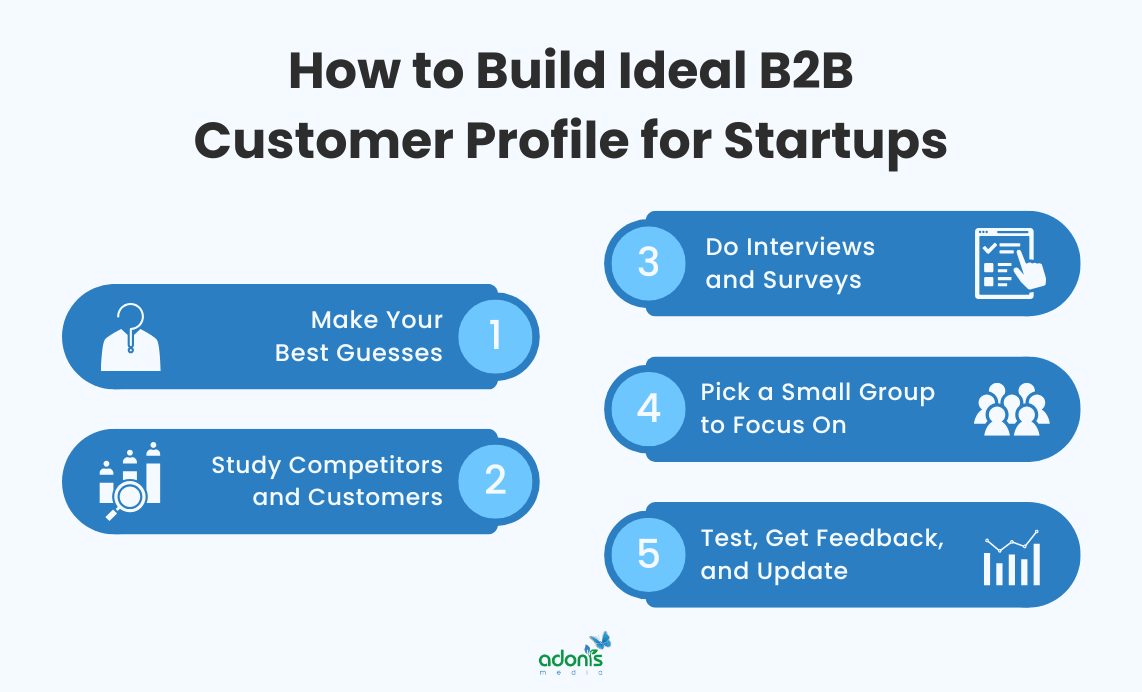
1. Make Your Best Guesses
Start with what you know from your own experience, research, and why you built your product. Like any other startups that are now large companies across the globe, they built their product for a reason and a specific group of customers.
Picture who needs your solution most. Think about the details from the Ideal B2B Customer Profile formula, such as company size, industry, and what key job titles are involved in buying. Don't worry about being perfect.
Try to be specific. For example, you might begin by guessing that financial tech startups with fewer than 50 staff or marketing agencies in busy cities would benefit most. The more details you add, the easier it is to test these ideas as you grow.
2. Study Competitors and Their Customers
Take a careful look at other companies serving your space. See who their customers are, what problems they solve, and why people stick with them.
If you want to enter an existing market, your product or service needs to be at least 5x better or offer something new that truly stands out. Otherwise, people have no reason to switch.
Study their case studies, customer reviews, and even what customers don't like. Find what works and where other products fall short. Understand if their clients value speed, price, or new features, and note what you can truly do better, not just differently.
Doing this will help you adjust your guesses. It also gives you real examples of what good ICP details should look like, so your profile isn't just a copy. It's focused on a group who'll notice your unique value.
3. Do Customer Interviews and Surveys
Reach out to people and businesses who fit your ideal customer. Even if they aren't paying clients yet, you can ask questions about their pain points, wishes, and current solutions. Use online groups, LinkedIn, or even friends in your target space to find these people.
Don't just focus on 'yes or no' answers. Try to learn what frustrates them, what they wish worked better, and how they choose between new tools or suppliers. This real-world feedback lets you check if your assumptions are right or need an update.
Keep notes on patterns you see. Maybe potential customers say they want an easier setup, faster support, or new payment options. These details help you sharpen your ICP and future product updates.
4. Pick a Small Group to Focus On First
Don't try to target everyone. Instead, use what you've learned so far to pick one clear group or your 'beachhead' market. It could be design agencies in London, eco-friendly breweries, or SaaS founders in fintech.
Focusing on one group makes it easier to personalise your message, get feedback, and see what works. You'll save effort compared to trying to win everyone at once.
As you test and grow, you'll know quickly if you're attracting the right customers. If they're not interested or not a fit, adjust your focus early before burning resources.
5. Test, Get Feedback, and Update
Now, get your idea in front of your chosen group. Launch a pilot, show your product demo, or offer a free trial. Watch how potential customers respond: do they want more, or do they go quiet?
Ask for feedback and be ready to hear what needs fixing. Maybe your target users love one feature but want another changed. Use this criticism to improve your offer and adjust your ICP.
Just repeat this loop as you grow: test, listen, and update.
Further Learning
Looking to learn more? I've collected some fantastic resources that go hand-in-hand with this topic if you want to dive deeper.
- blog.hubspot.com — How to Get the Most Out of Firmographic Data for Your Marketing
- blog.hubspot.com — 9 Benefits of Customer Interviews & How to Conduct Them
- blog.hubspot.com — What Is a Competitive Analysis — and How Do You Conduct One?
- reddit.com — Reddit r/ProductManagement Thread: "How I run customer interviews (and why they're better than analytics for 0-1)"
- reddit.com — Reddit r/ProductManagement Thread: "How to calculate Total Addressable Market"
Growing Your Business With the Right Customers
Building a strong ICP requires continuous effort, and you don't stop after you've created one. It's a cycle that helps both new and growing businesses save time, reach the right people, and grow with less stress. Keep learning, stay flexible, and use your ICP as a living guide to always sharpen your targeting and message.
Review your ICP every 6-12 months, not just when you hit a problem. Markets, trends, and even your best customers can change. Staying proactive will keep your business ahead and your marketing focused.
Ready to take the next step? Book a free consultation with our team. We'll help you review your current ICP, refine your targeting, and guide you towards the perfect customers for your business. No guesswork needed.
Got a question in mind? Check out the FAQs below for quick answers!
