
Building a strong brand presence on social media platforms has become essential, yet many businesses have been struggling to navigate the complex landscape of digital marketing effectively.
With over 5.22 billion social media users worldwide and 71% of consumers more likely to purchase from brands they follow on social media, businesses can't afford to miss out on these opportunities.
That being said, without proper social media marketing knowledge, companies often waste resources on ineffective strategies, leading to poor engagement and missed growth opportunities.
This comprehensive guide to social media marketing for business growth will help you understand the essential strategies, platforms, and techniques to build a successful online presence.
Key Takeaways
- Social media marketing is essential for modern businesses, enabling them to connect with audiences, build brand awareness, and foster engagement across platforms.
- Benefits of social media marketing include increased brand visibility, enhanced customer engagement, community building, lead generation, customer retention, and market research opportunities.
- Each platform has unique characteristics: Facebook excels in community building, Instagram in visual storytelling, TikTok in short-form videos, LinkedIn in professional networking, and YouTube in long-form content.
- Platform-specific posting frequencies vary: 1-2 posts daily on Facebook, at least 2 posts on Instagram, 1-3 posts daily on TikTok, 3-5 posts weekly on LinkedIn, and 1-2 videos weekly on YouTube.
- Audience segmentation techniques such as group creation, geographic targeting, interest-based segmentation, and platform-specific tools help create targeted content that resonates with specific groups.
- A successful social media marketing strategy includes defining clear objectives, researching the target audience, choosing appropriate platforms, creating a content calendar, monitoring results, engaging consistently, and adapting strategies based on performance data.
What Is Social Media Marketing?
Social media marketing is a type of modern digital marketing that helps businesses connect with their target audience online with the use of social media platforms.
It involves creating and sharing content across various platforms like Facebook, Instagram, X (Twitter), and LinkedIn to build brand awareness and drive engagement.
Social media marketing focuses on developing meaningful relationships with customers through regular interactions and valuable content sharing. This approach to social media goes beyond simply posting updates. It's about creating a two-way conversation and effective communication that benefits both businesses and their followers.
Social media marketing has become essential for businesses of all sizes as we all enter digital transformation. Companies use various social media platforms to reach known and unknown customers where they spend most of their time online, making connecting and building lasting relationships easier.
For modern businesses, social media serves as more than just a promotional tool. It acts as a customer service channel, market research platform, and community hub, all rolled into one.
Many companies have found success with social media marketing by using these platforms to gather feedback, address concerns, and deliver customer success.
The beauty of social media marketing lies in its flexibility and reach. Whether you're a small local shop or a large corporation, learning how to do social media marketing properly can help you achieve your business goals without breaking the bank.
Benefits of Social Media Marketing
Social media marketing has transformed how businesses connect with their audiences by including this in their brand strategy. Through the strategic use of various social media platforms, companies can build lasting relationships, increase their market presence, and drive sustainable growth.
Brand Building
Increased Brand Visibility
Social media offers unprecedented opportunities to boost your brand's visibility in the digital space.
Through consistent posting and engagement on social media platforms, businesses can reach wider audiences and maintain a steady online presence. This helps companies stay visible in their customers' feeds, leading to increased brand recognition and recall.
Regularly posting valuable content helps businesses stay top-of-mind when customers make purchasing decisions.
Enhanced Customer Engagement
A strong content strategy on social media platforms helps businesses foster meaningful interactions with their audience.
Through thoughtful social media marketing, companies can respond to comments, participate in discussions, and create interactive content that encourages two-way conversations.
This active engagement helps businesses understand their customers better and shows that they value customer input.
Community Building
A well-planned social media marketing approach helps create thriving online communities around your brand.
Businesses can promote genuine connections with their audience through shared interests and values. The key lies in creating spaces where customers can interact not just with the brand but with each other, sharing experiences and building trust through authentic conversations.
Business Growth
Lead Generation
Effective social media marketing helps businesses attract and capture potential customers through engaging content and strategic outreach.
By implementing a solid content strategy across various social media platforms, companies can create valuable touchpoints that convert followers into leads. This allows businesses to use features like targeted ads, polls, and interactive content to gather contact information and build their prospect database.
Customer Retention
Effective social media marketing is crucial for keeping existing customers engaged and loyal to your brand.
A well-planned content strategy across social media platforms helps maintain ongoing relationships with customers after their initial purchase.
By sharing helpful tips, and updates, and responding promptly to customer service queries on social media, businesses can create a positive experience that encourages repeat purchases and brand loyalty.
Market Research Opportunities
A strategic social media marketing approach provides valuable insights into customer behaviour and market trends.
Through monitoring conversations and engagement on social media platforms, businesses can gather real-time feedback about their products and services. This includes analysing comments, mentions, and hashtags to spot emerging trends and customer preferences, helping businesses make data-driven decisions for their content strategy.
Social Media Platform Guide
Understanding which social media platforms best suit your business is crucial for success in social media marketing.
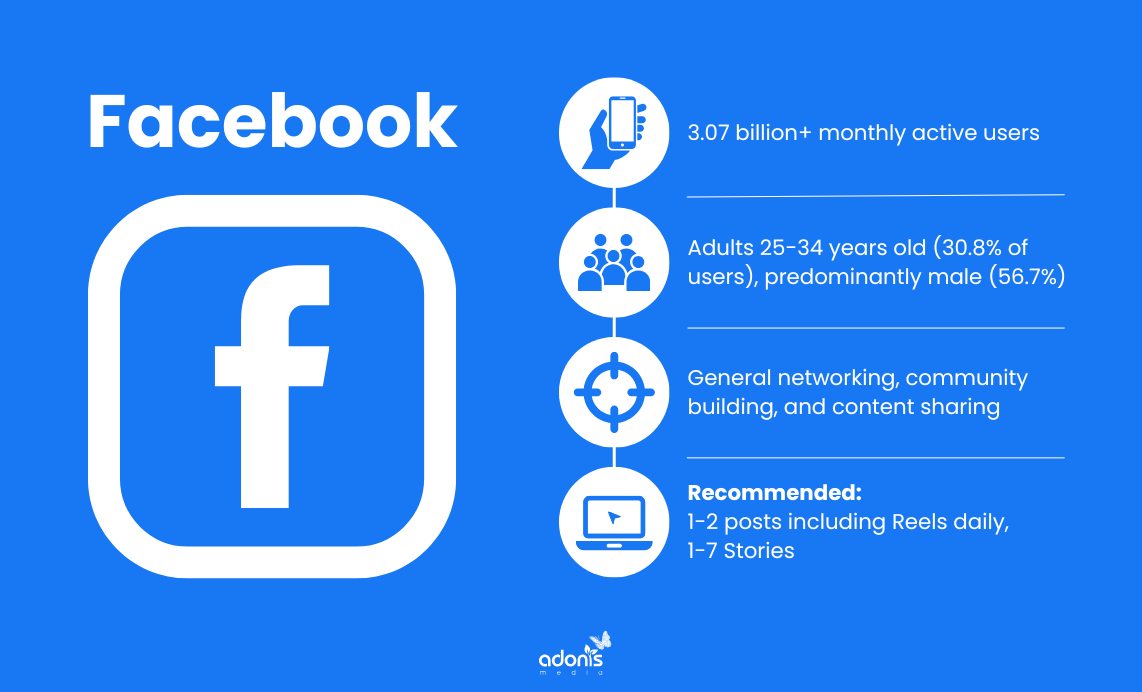
Facebook remains the world's largest social platform, offering comprehensive features for both personal and business use. People come here for all sorts, such as networking, joining communities, and sharing content with friends or groups.
Facebook has a massive reach, with around 3.07 billion people using it every month. Most users are adults aged 25 to 34, making up about 30.8% of the total, and the platform leans slightly towards a male audience at 56.7%.
For posting, aim for one or two posts a day, including Reels, and keep your stories fresh with up to seven each day. This helps you maximise engagement without overwhelming followers' feeds, as engagement tends to drop with more frequent posts.
TikTok
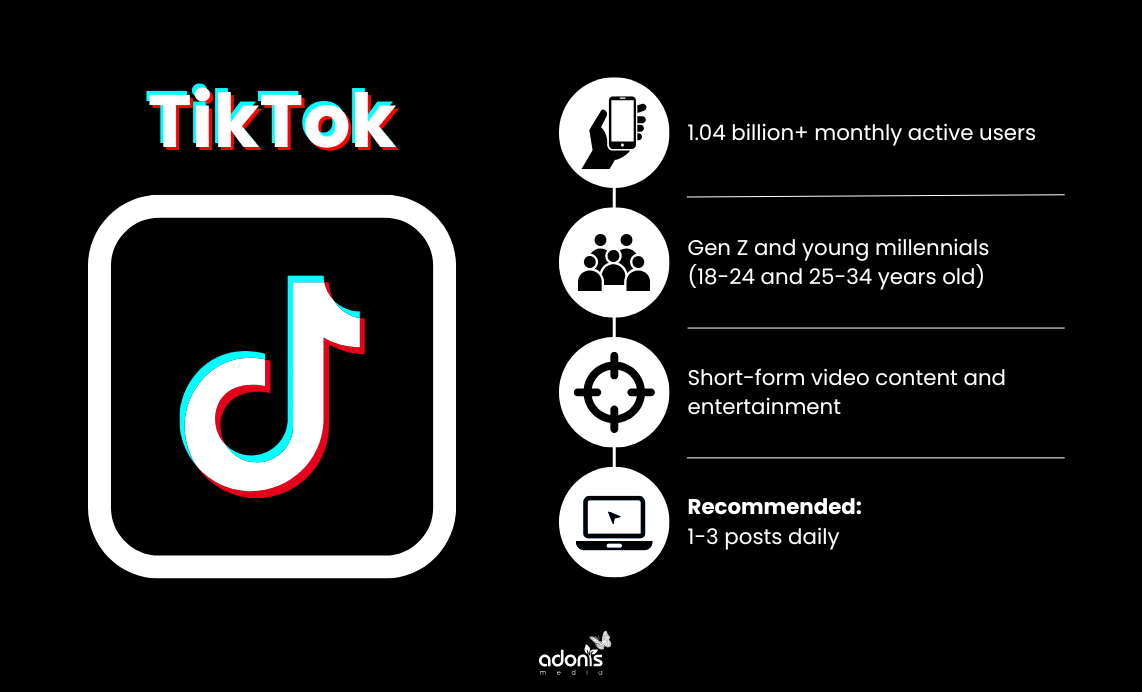
TikTok has revolutionised social media with its algorithm-driven content delivery and emphasis on creative short videos. It's all about short-form videos and pure entertainment-think quick laughs, dance trends, and creative challenges.
The platform's engagement rates surpass traditional social networks, making it ideal for viral marketing campaigns.
TikTok draws in about 1.04 billion people every month. The crowd here is mostly Gen Z and young millennials, especially those aged 18 to 34.
If you want to stay visible, post one to three times daily. The platform's unique format encourages frequent posting and gives you a better shot at landing on someone's For You Page.
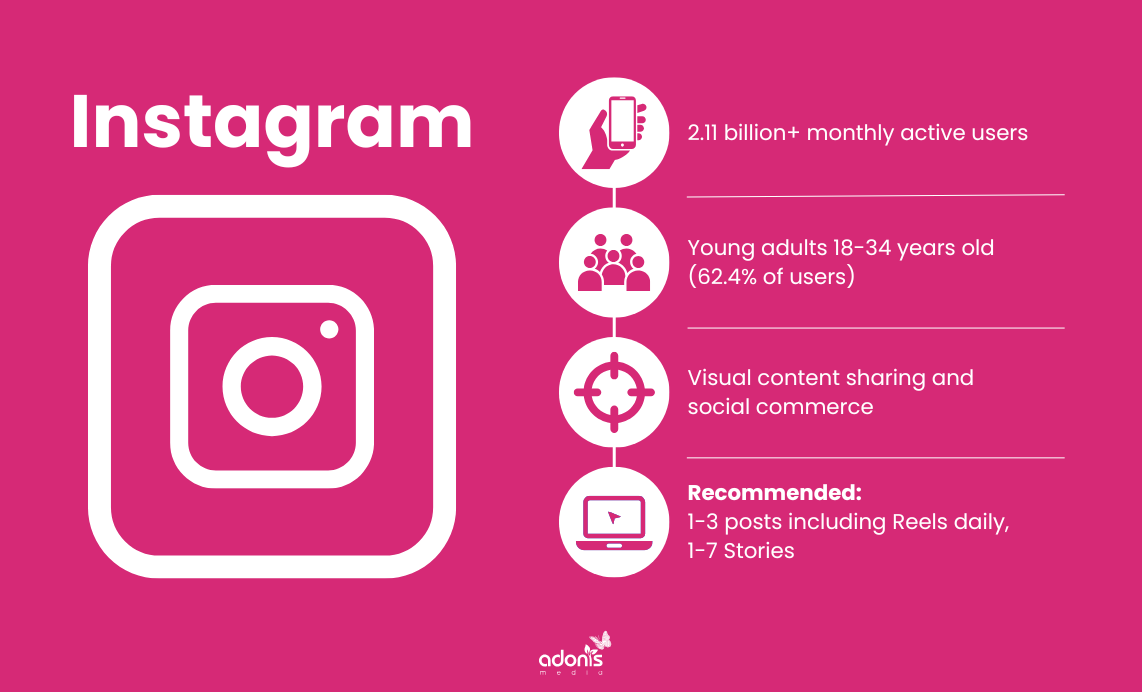
Through photos, Stories, and Reels, Instagram excels in visual storytelling and engagement. People flock to Instagram to share photos, videos, and shop, making it a hotspot for both creativity and social commerce.
Instagram has a vast audience, about 2.11 billion people log in every month. Most users are young adults, especially those aged 18 to 34, who make up nearly two-thirds of the platform's audience.
For best results, aim to post one to three times a day, including Reels, and keep your stories rolling with up to seven daily. The platform's algorithm favours Stories, and many successful brands post up to 7 times daily without seeing adverse effects on engagement.
X (formerly Twitter)
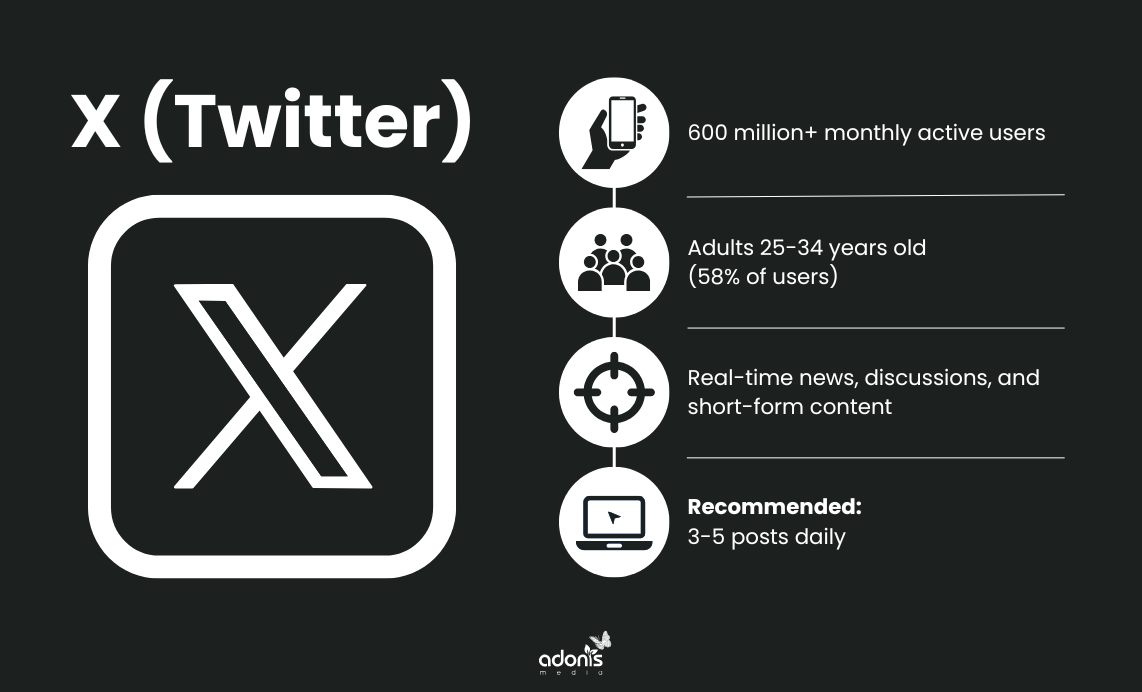
X serves as a hub for real-time conversations and news sharing. People come here for quick updates, trending discussions, and short, snappy content.
X has around 600 million people each month. The largest slice of users are adults aged 25 to 34, and most of users (58%) are below 35 years old.
To stay relevant and visible, aim for three to five posts a day. This helps you keep up with the fast pace and keeps your followers in the loop.
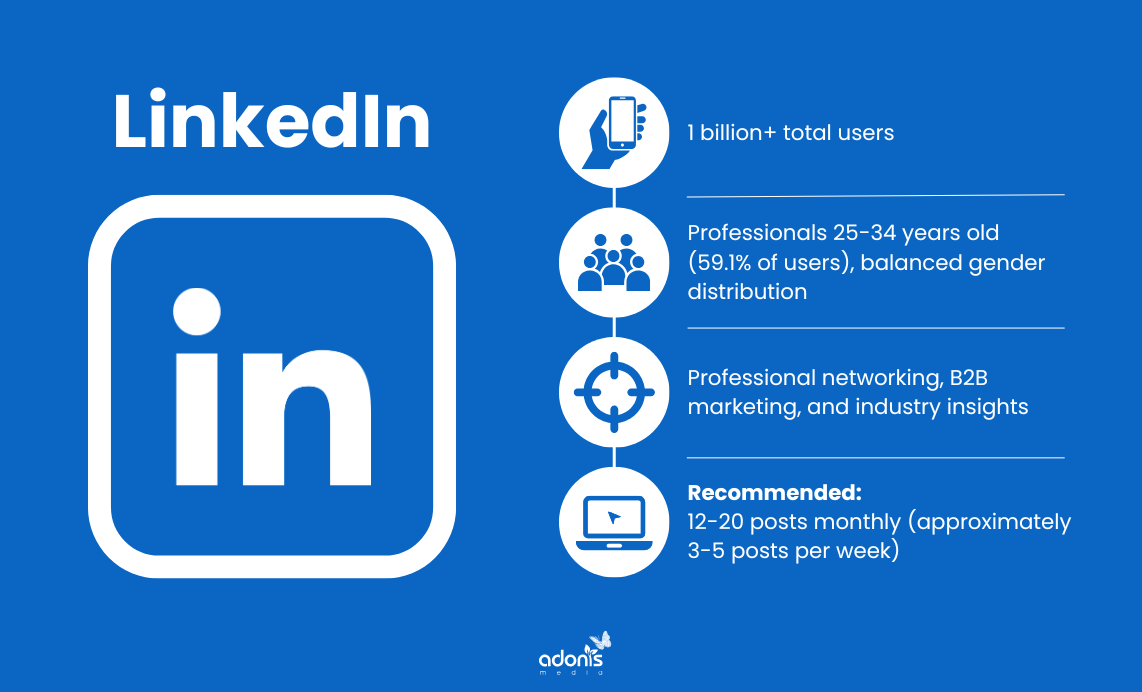
LinkedIn stands out as the premier platform for business growth, especially in B2B sectors. The platform is all about professional networking, B2B marketing, and sharing industry insights.
LinkedIn is the go-to spot for professionals, with over 1 billion users in total. Most people here are aged 25 to 34, making up about 59% of the audience, and there's a nice balance between men and women.
Aim for 12 to 20 posts a month. That's roughly three to five posts each week. Posting once per business day helps maintain an active presence while respecting the platform's professional nature.
YouTube
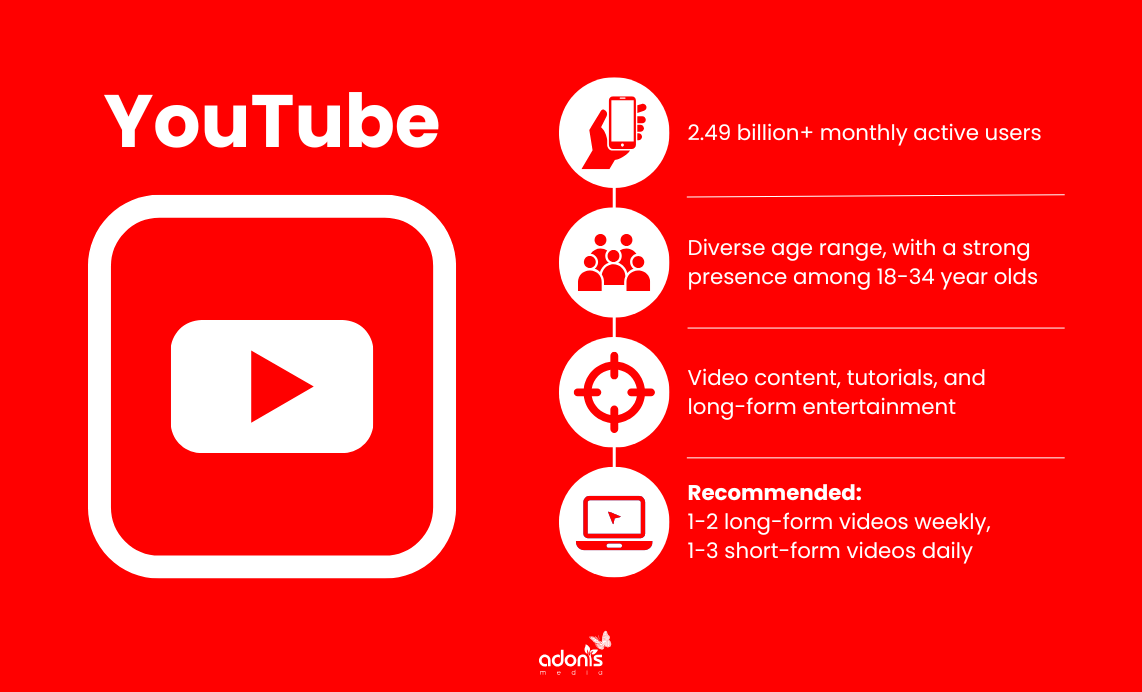
YouTube excels as a social media platform for detailed content and brand storytelling. Its search engine capabilities make it powerful for content strategy and educational material.
It's the place for all things video, whether that's tutorials, vlogs, or long-form entertainment.
YouTube draws in over 2.49 billion people every month. The audience is pretty diverse, but there's a strong crowd of 18 to 34-year-olds tuning in.
For best results, aim to upload one or two long-form videos each week, and keep things lively with one to three short-form videos or Shorts daily. This way, you stay fresh in your subscribers' feeds and reach more viewers.
The platform favours quality and depth over posting frequency for social media marketing, but Shorts has become the game-changer. You may create Shorts from your long-form videos to stay active daily.
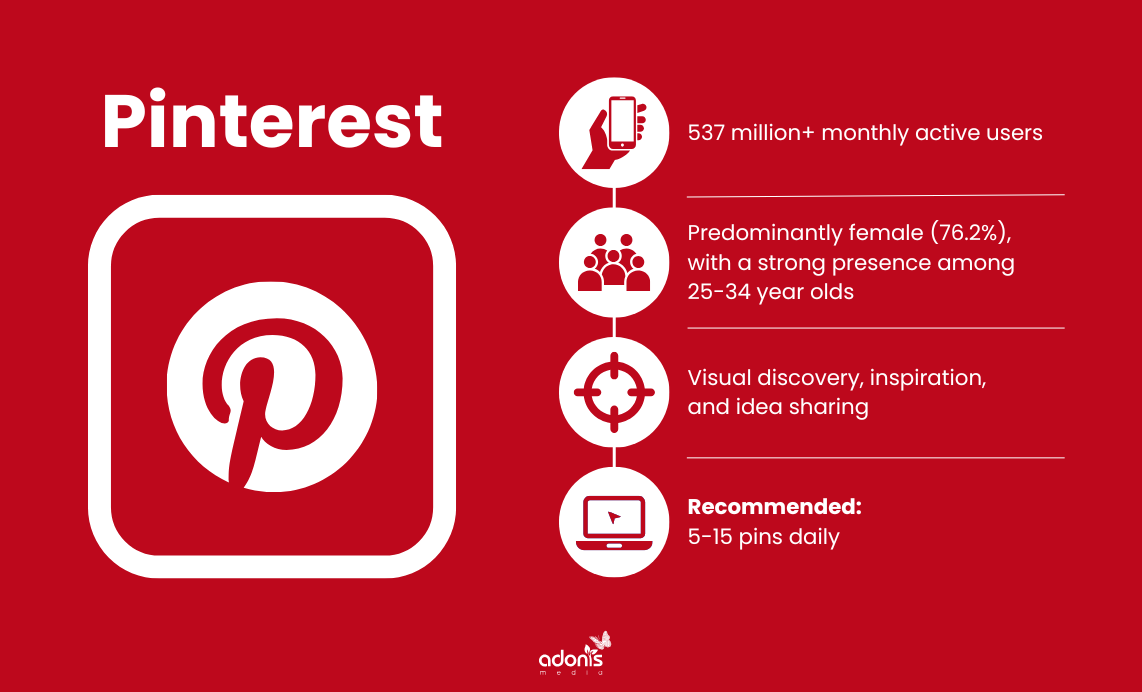
Pinterest excels as a platform for visual content strategy. Its unique "pinning" system allows long-term content visibility.
Most users come here for inspiration, ideas, and creative discovery, whether it's for home décor, recipes, fashion, or travel. The platform thrives on sharing and saving visual content, making it perfect for those seeking fresh ideas and positive vibes.
Pinterest has over 553 million monthly active users worldwide. The audience is predominantly female — about 70% — with women aged 25 to 34 making up the largest segment.
If you want to keep your boards active and reach more people, aim to pin five to fifteen times daily. This steady flow of new Pins keeps your content in front of users as they browse for their next spark of inspiration.
Threads
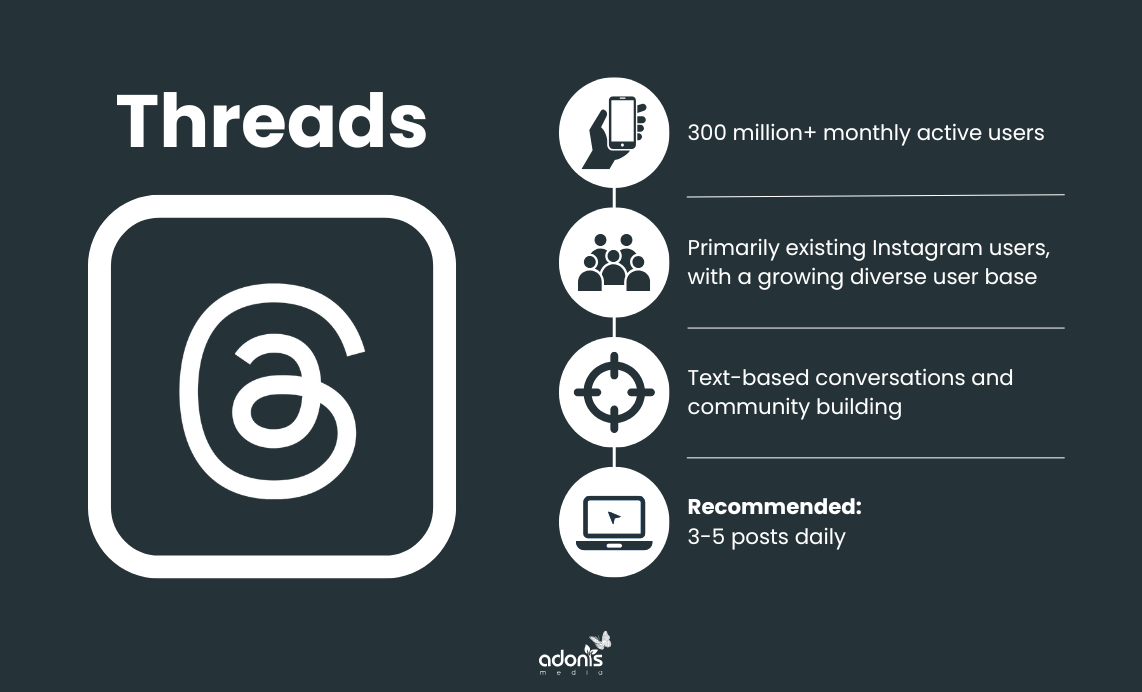
As Meta's newest social media platform, Threads aims to capture the real-time conversation market. The platform focuses on text-based conversations and building communities around shared interests.
Threads has quickly grown to over 300 million monthly active users, mainly attracting people who already use Instagram, though its audience is becoming more diverse.
To stay active and keep followers engaged, aim for three to five posts a day. The text-based format allows for quick updates while maintaining meaningful conversations with your audience.
Audience Segmentation Techniques
Creating targeted content that resonates with specific audience groups is essential for effective social media marketing. With billions of users worldwide, standing out requires a laser-focused approach to reach the right people with the right message.
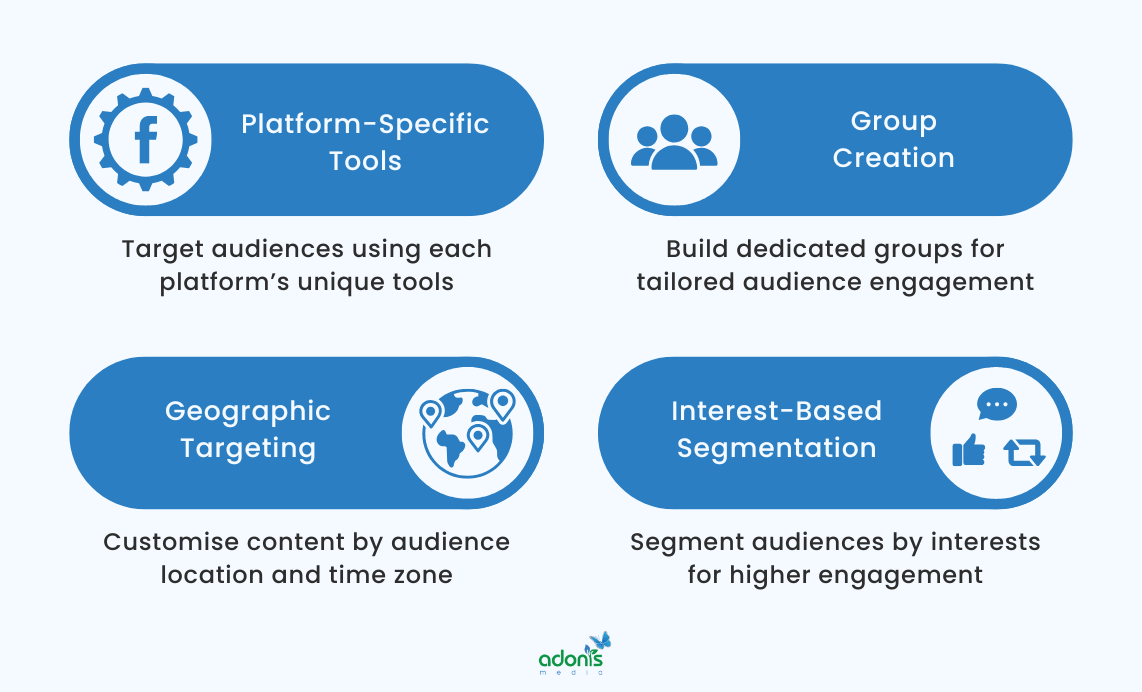
Platform-Specific Tools
Effective social media marketing starts with using built-in targeting tools across different social media platforms.
Facebook allows segmentation by demographics, interests, and behaviour, while LinkedIn focuses on professional attributes like industry and company size.
These platform-specific tools help businesses create targeted content that resonates with specific audience segments, making your content strategy more effective and ensuring your message reaches the right people at the right time.
Group Creation
Creating focused groups on social media platforms is crucial for social media marketing.
By establishing dedicated communities based on shared interests, demographics, or needs, businesses can deliver tailored content to specific audience segments.
This approach allows for more personalised engagement and helps build stronger relationships with different customer groups while maintaining relevant conversations within each community.
Geographic Targeting
Using social media marketing effectively requires understanding your audience's location and time zones.
Through geographic targeting on various social media platforms, businesses can tailor content to specific regions and cultures. This helps create more relevant and engaging content while optimising posting schedules for maximum visibility across different time zones.
Interest-Based Segmentation
A successful content strategy involves grouping your audience based on their interests and behaviours across social media platforms.
By analysing engagement patterns, likes, shares, and comment types, you can create targeted content that resonates with specific interest groups. This targeted approach leads to higher engagement rates and better conversion opportunities.
Social Media Marketing Strategy
A successful social media marketing strategy isn't just about posting content — it's about creating a roadmap that meets your business objectives and resonates with your target audience.
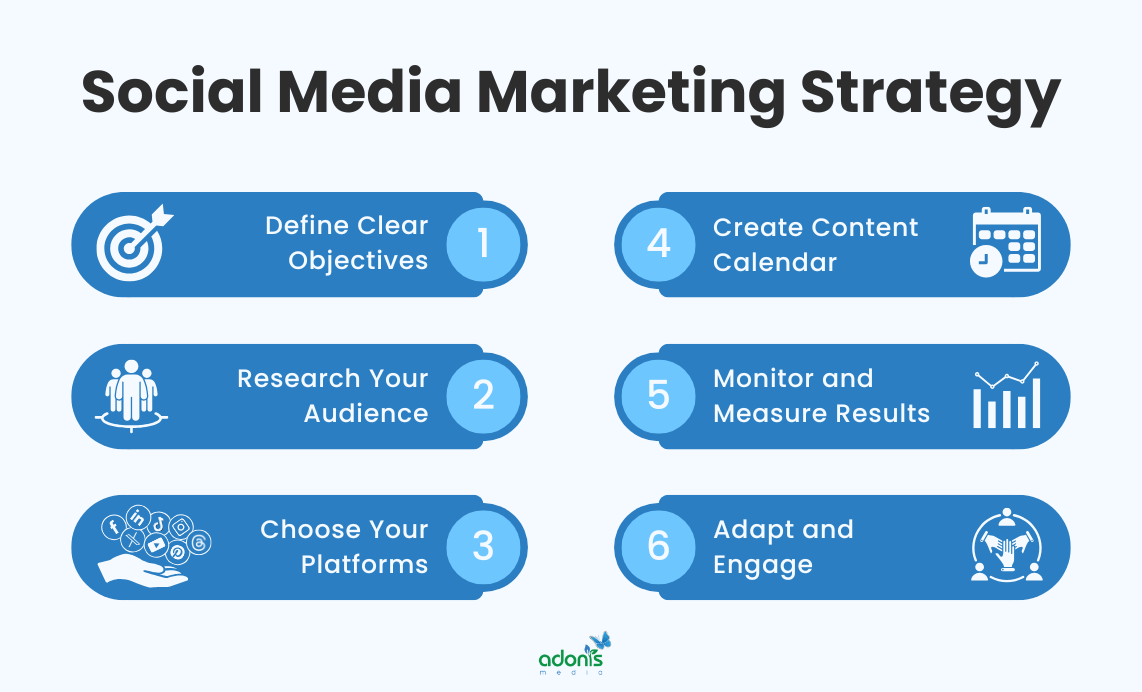
1. Define Clear Objectives
Setting specific, measurable goals is the foundation of effective social media marketing.
Your objectives should be SMART (Specific, Measurable, Achievable, Relevant, Time-bound) and directly tied to your business goals. This could include increasing brand awareness, driving website traffic, or generating qualified leads.
If your goal is to increase brand awareness, set a target like "Increase Instagram followers by 25% in the next three months through daily posting and engagement."
Remember to document these objectives and share them with your team to ensure everyone is working toward the same goals across all social media platforms.
2. Research Your Target Audience
Understanding your audience is crucial for your content strategy.
This involves analysing demographics, behaviours, and preferences across different social media platforms. Use platform analytics tools to gather data about when your audience is most active and what type of content they engage with most.
If you're targeting professional millennials, LinkedIn might show peak engagement during lunch hours and early evenings, while Instagram engagement might be higher during commute times.
Use these insights to create audience personas that guide your content creation and posting schedule.
3. Choose Appropriate Platforms
Selecting the right social media platforms for business growth requires careful consideration of your target audience and business goals.
Each platform serves different demographics and content types, making it crucial to invest your resources where they'll generate the best returns. Your content strategy should align with the unique characteristics of each chosen platform.
A fashion retailer might focus on Instagram and Pinterest for their visual appeal, while a B2B software company would prioritise LinkedIn and X for professional networking and industry updates. Facebook, with its broad reach, could serve both types of businesses but with different content approaches.
Track engagement metrics across your chosen social media platforms to validate your platform selection and adjust your presence accordingly.
4. Create Content Calendar
A well-structured content calendar is essential for successful social media marketing.
This organisational tool helps maintain consistency across platforms while respecting each platform's optimal posting frequency. Your calendar should account for different content types, promotional materials, and engagement opportunities while maintaining a balanced mix of valuable content.
Plan your monthly content with themed days: Monday for industry insights, Wednesday for customer success stories, and Friday for behind-the-scenes content. This structure helps maintain consistency while keeping content fresh and engaging.
Regular review and adjustment of your content calendar ensures your social media marketing stays relevant and effective.
5. Monitor and Measure Results
Tracking performance is essential for social media marketing.
Using analytics tools across your social media platforms helps you understand what content resonates with your audience, when they're most engaged, and which strategies drive the best results. Your content strategy should evolve based on these insights.
If analytics show that your how-to videos on Instagram get 3x more engagement than product photos, adjust your content mix to include more tutorial content. Similarly, if LinkedIn posts at 9 AM get more engagement than afternoon posts, schedule your important content during peak hours.
Use these metrics to make data-driven decisions about your future content and posting strategy, ensuring consistent improvement in your social media marketing efforts.
6. Adapt and Engage
Regular engagement is not optional for successful social media marketing, but a must.
This means not just posting content but actively participating in conversations, replying to comments, and building relationships with your audience across social media platforms. Consistent engagement helps maintain visibility in algorithms and builds trust with your followers.
Set aside 30 minutes daily to respond to comments, participate in relevant discussions, and share user-generated content. This could include thanking customers for positive feedback or addressing concerns promptly.
Continuous improvement is vital for successful social media marketing as well, especially when aiming for business growth.
This involves regularly reviewing your performance across social media platforms and adjusting your approach based on data and audience feedback. Your content strategy should be flexible enough to adapt emerging trends, platform updates, and changing audience preferences.
If your analytics show that video content on Instagram Reels gets 50% more engagement than static posts, gradually increase your video content production. Similarly, if specific topics consistently generate more comments and shares, incorporate more of that content type into your strategy.
Further Learning
Looking to learn more? I've collected some fantastic resources that go hand-in-hand with this topic if you want to dive deeper.
- backlinko.com — Facebook User & Growth Statistics
- backlinko.com — TikTok Statistics You Need to Know
- backlinko.com — YouTube Stats: How Many People Use YouTube?
- sproutsocial.com — 24 must-know Pinterest stats for marketers in 2024
- expandi.io — LinkedIn Demographics 2024: Is The Platform Right For Your Business?
- datareportal.com — Global Social Media Statistics
- oberlo.com — Oberlo Statistics Library
- reddit.com — Reddit r/SocialMediaMarketing Thread: "What's a Social Media trick that surprised you with how well it worked?"
- reddit.com — Reddit r/socialmedia Thread: "What are your go-to tips and tricks for someone new to social media?"
- sitepoint.com — Sitepoint Community Question: "Social Media Marketing Tips for Newbies"
Taking Your Social Strategy to the Next Level
Mastering social media marketing isn't about being everywhere at once — it's about being in the right places with the right message for the right audience.
From choosing your social media platforms wisely to creating engaging content that resonates with your audience, success comes from deeply understanding your audience and delivering value consistently. Remember, a strong content strategy paired with authentic engagement creates lasting connections that transform followers into loyal customers.
Ready to transform your social media marketing for business growth? Book your free consultation today, and let's craft your social success story together.
Got a question in mind? Check out the FAQs below for quick answers!
