
Getting a negative review feels like a punch to the gut. Business owners dread seeing that one-star rating pop up, knowing it could impact their reputation and sales.
Most companies either ignore these reviews or respond defensively, worsening the situation. They miss out on valuable opportunities to showcase their customer service, build trust, and turn unhappy customers into loyal advocates.
Here's the truth: those negative comments aren't going anywhere, but they just wait to be transformed. By embracing negative reviews and handling them strategically, you can actually boost your brand's credibility and customer loyalty.
Let's explore how these critical comments can become your secret weapon for business growth.
Key Takeaways
- Negative reviews are opportunities to showcase customer service excellence and build trust through transparency and responsiveness.
- Addressing negative feedback promptly can turn critics into loyal customers, enhancing brand reputation and customer retention.
- Businesses that engage with reviews see higher conversion rates and improved customer loyalty through professional responses.
- Common reasons for negative reviews include poor service, product issues, delivery problems, unmet expectations, pricing concerns, and staff behaviour.
- Responding publicly with empathy and solutions demonstrates accountability and builds trust with both current and potential customers.
- Offering immediate solutions like refunds or discounts helps diffuse tension while long-term fixes prevent recurring issues.
- Negative reviews provide valuable insights for improving business operations, quality control, and customer experience.
- Proper review management differentiates your brand as transparent, reliable, and committed to customer satisfaction.
Negative Reviews: Should I Fear or Embrace It?
Let's be honest here. Nobody enjoys getting negative reviews. It's like getting socks for Christmas when you want a PlayStation.
But what if those socks were the comfiest pair you've ever worn? That's precisely what negative feedback can be for your business.
Negative reviews aren't just complaints. They're golden opportunities to showcase your customer service excellence and build trust with potential customers. When handled properly, these critical comments become powerful tools demonstrating your commitment to customer satisfaction and continuous improvement.
That being said, 79% of businesses don't respond to negative reviews, missing crucial opportunities to retain customers.
 Source: @gettyimages via canva.com
Recent studies show that 89% of customers worldwide become loyal to brands after positive customer service experiences. This statistic highlights why proper handling of negative feedback matters, as 60% of customers will leave a brand after poor customer service experiences.
Additionally, 55% of customers feel good about a business when owners respond to their reviews, and 56% change their perspective of them based on how they respond to their specific reviews.
As a matter of fact, 86% of users will reconsider buying from a company with negative reviews. Ironic, isn't it?
So, just think of negative reviews as free consultancy sessions. When you embrace them with open arms and a problem-solving mindset, you're not just saving one customer relationship but building a stronger foundation for countless future ones.
The True Value of Negative Reviews
Negative reviews might feel like a punch to the gut, but they're actually hidden gems for your business growth. Every critical comment presents a chance to show your commitment to customer satisfaction and improve your services. Smart businesses know that managing these reviews effectively can turn critics into loyal fans.
Let's discover how negative feedback can become your stepping stone to business and customer success.
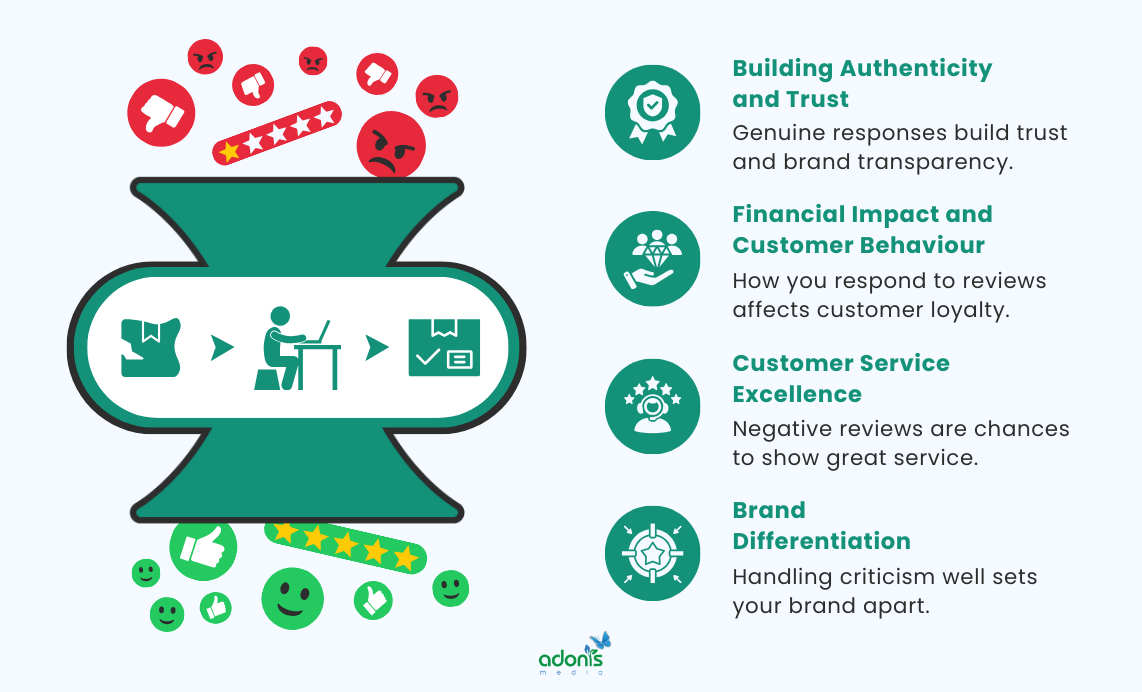
Building Authenticity and Trust
Trust in business isn't built on perfect 5-star ratings, but on how you handle the not-so-perfect moments. When customers see genuine responses to negative reviews, they're more likely to trust your brand because it shows transparency and willingness to improve.
Customers also look for negative feedback or reviews before they buy. Why? Some businesses tend to manipulate their ratings and reviews in various ways.
Studies show that 68% of consumers trust reviews more when they see positive and negative feedback. Furthermore, 95% of shoppers suspect censorship or fake reviews when they don't see any negative comments about a business.
Think of negative reviews as your business's truth serum. They keep you honest and help you build genuine connections with customers. After all, nobody trusts a person who claims they've never made a mistake, so why would they trust a business that appears perfect?
Financial Impact and Customer Behaviour
Negative reviews can have a surprising impact on your business's financial performance. While they might initially deter some customers, how you respond to these reviews can turn the tide.
Addressing issues promptly and professionally demonstrates your commitment to customer service and builds trust, which ultimately influences purchasing decisions.
Research shows that 97% of customers consider customer service a key factor in brand loyalty. Additionally, businesses that actively engage with negative reviews see a significant increase in customer retention rates, with loyal customers spending up to 67% more than new ones.
You can think of every negative review as a test you can ace. Handle it well, and you retain the customer and attract others who admire your transparency and dedication to improvement.
Customer Service Excellence
Negative reviews provide an excellent opportunity to showcase your business's dedication to customer service.
When you respond to these reviews empathetically and professionally, you demonstrate that your brand values its customers and is committed to resolving issues effectively.
Research shows that 93% of customers are likely to make repeat purchases with companies that deliver excellent customer service, and 83% of customers report feeling more loyal to brands that answer and settle their complaints when businesses address customer concerns promptly. Furthermore, 45% of consumers are more likely to visit a business that actively responds to negative reviews.
Brand Differentiation
When handled effectively, negative reviews can set your business apart from competitors.
While many companies shy away from addressing criticism, responding with professionalism and empathy demonstrates your commitment to customer satisfaction. This shows potential customers that your brand values feedback and strives to improve.
Businesses that actively engage with negative reviews are more likely to retain customers and build a reputation for excellent service. By embracing negative reviews as opportunities rather than obstacles, you position your brand as transparent, reliable, and customer-focused.
Reasons Why You Receive Negative Reviews
Every business experiences negative feedback at some point, and understanding why customers leave these reviews helps prevent future issues. Whether positive or negative, customer feedback shapes how we improve our products and services.
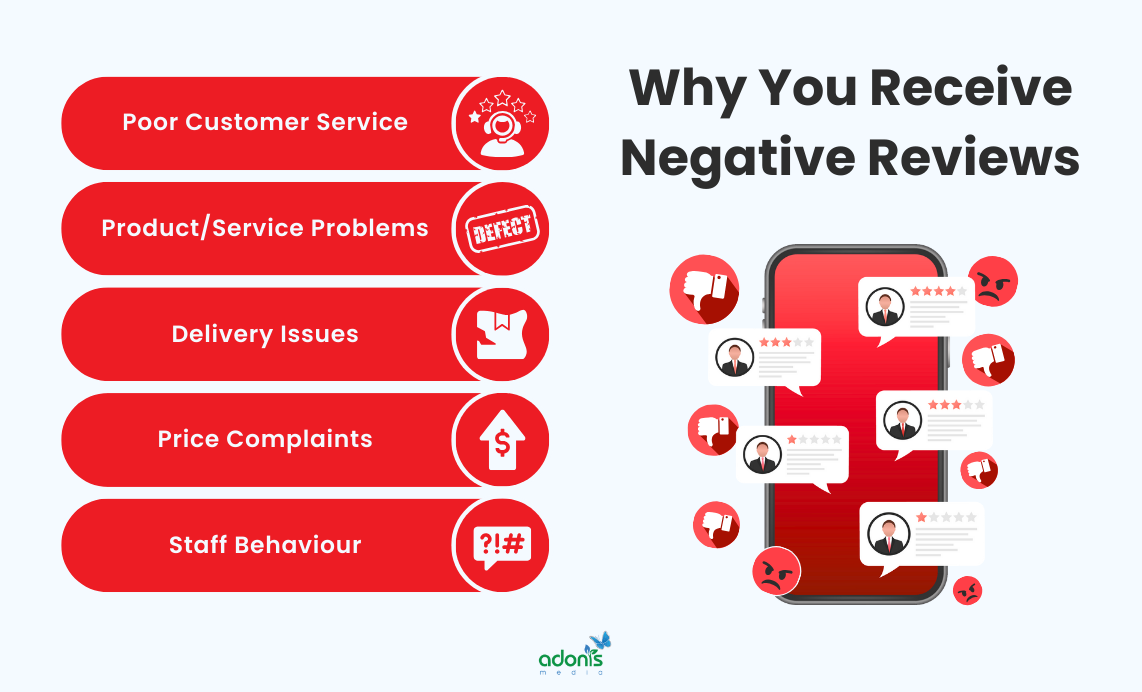
Poor Customer Service
Customer service complaints often stem from a disconnect between customer expectations and actual service delivery.
When customers feel ignored, disrespected, or poorly treated during their interactions with your business, they're likely to voice their dissatisfaction through negative reviews and share their experiences online.
Here's how customers typically express their frustration with poor service:
- "Called thrice and was put on hold for 10 minutes each time!"
- "The staff member was rude and dismissive of my concerns."
- "Sent multiple emails but never received any response!"
- "Customer service representative kept transferring me to different departments, especially Spanish!"
- "They promised to call back but never did."
Yeah, I know you have already received emails like these or heard these over the phone.
Remember that each complaint about poor service is an opportunity to enhance your customer support processes. By identifying patterns in these reviews, you can implement targeted training programmes and establish clear service standards that prevent similar issues in the future.
Product/Service Problems
Customers who invest their money in your products or services expect quality that matches your marketing promises. Issues with product functionality, service delivery, or overall quality often lead to disappointment and subsequent negative reviews.
Here's how customers typically express their product and service-related concerns:
- "The product stopped working after two weeks of use!"
- "Service quality was nowhere near what was advertised."
- "Features mentioned on the website were missing."
- "Quality doesn't justify the price tag."
- "The product specifications were completely different from what I received!"
Every product or service complaint presents a chance to refine your quality control processes, so take note of these.
By carefully documenting these issues and implementing systematic improvements, you can prevent these mistakes from affecting future customers while demonstrating your commitment to excellence.
Delivery Issues
Late deliveries, damaged packages, and shipping confusion can quickly lead to customer dissatisfaction. When delivery expectations aren't met, customers often turn to reviews to voice their frustrations and warn others about potential shipping problems.
Here's how customers typically express their delivery concerns:
- "Package arrived five days later than promised delivery date!"
- "My order was left in the rain despite clear delivery instructions."
- "Tracking information was never updated."
- "Wrong shipping address used despite multiple confirmations!"
- "Items were poorly packaged and arrived broken."
- "Delivery person was unprofessional and careless with my package!"
Usually, shipping is not your fault if you have courier services, but we can't emphasise this to every customer. That being said, every delivery complaint offers a chance to review and strengthen your shipping processes.
By partnering with reliable courier services and implementing robust tracking systems, you can significantly reduce these issues while showing customers that their delivery experience matters to your business.
Price Complaints
Pricing issues and unexpected costs often trigger strong customer reactions in reviews. When customers feel they've paid too much or encountered hidden charges, their disappointment usually translates into detailed negative feedback about their purchase experience.
Here's how customers typically voice their price-related concerns:
- "Hidden fees weren't disclosed until checkout."
- "Price increased significantly from what was initially quoted!"
- "Quality doesn't match the premium price point."
- "Cheaper alternatives offer better value for money."
- "Extra charges appeared on my bill without explanation!"
- "Discount code didn't work despite being advertised!"
Each price-related complaint gives you the chance to evaluate your pricing strategy and communication. By being transparent about costs and ensuring your pricing aligns with the value you deliver, you can build trust while reducing price-related negative reviews.
Staff Behaviour
Staff conduct and attitude can make or break a customer's experience with your business. Whether in-store interactions, phone conversations, or online support, your team's behaviour directly impacts customer satisfaction and their likelihood to leave reviews.
Here's how customers typically describe staff behaviour issues:
- "The sales assistant rolled their eyes when I asked questions!"
- "Staff member was busy chatting with colleagues instead of helping me."
- "Employee refused to help me find the right product."
- "Staff appeared untrained and couldn't answer basic questions!"
Each staff-related complaint highlights areas where additional training or support might be needed. Investing in your team's development and creating clear service standards can transform these negative experiences into opportunities for staff growth and improved customer interactions.
How to Manage Negative Reviews
We have already covered the reasons why you are getting those 1 or 2-star reviews. This time, let's look at how you can correct them and change future and existing customers' minds about you.
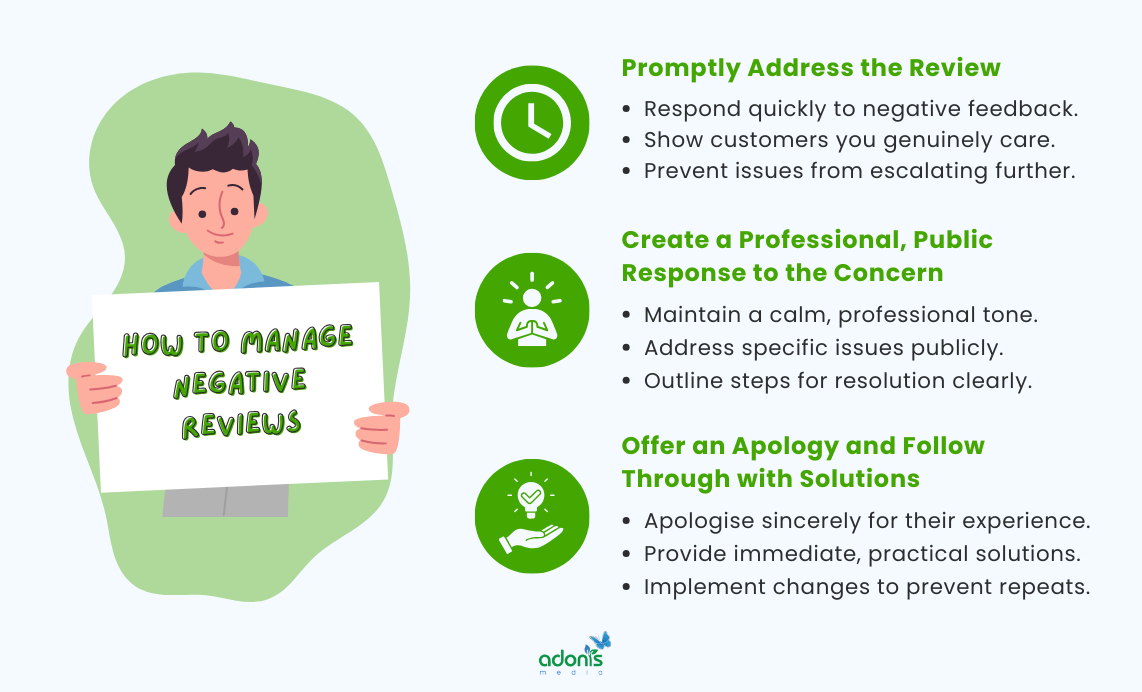
Promptly Address the Review
Quick responses to negative reviews show customers that you value their feedback and take their concerns seriously. A prompt reply within 24 hours demonstrates your commitment to resolving issues and helps prevent the situation from escalating into a larger problem.
For instance, a customer posts a negative review about a delayed delivery at 9 PM. The business responds by 9 AM the next day, acknowledges the delay, explains the situation, and offers immediate solutions to resolve the issue.
Another example is a client who leaves a critical review about product quality on a Saturday evening. The business responds first thing Sunday morning, thanks them for bringing this to attention, and provides multiple options for replacement or refund.
Your swift response to negative feedback isn't just about damage control. It's about showing every potential customer that you're actively engaged and ready to solve problems. This level of attentiveness often transforms frustrated customers into loyal supporters.
Create a Professional, Public Response to the Concern
Public responses to negative reviews serve as your brand's voice to both current and potential customers. A well-crafted response shows your commitment to customer satisfaction while maintaining professionalism, even when faced with harsh criticism.
When responding publicly, focus on addressing specific issues mentioned in the review while maintaining a balanced and solution-oriented tone. This approach demonstrates your business's dedication to transparency and continuous improvement.
Your public response should include clear steps you're taking to resolve the issue, acknowledge any shortcomings, and show genuine interest in making things right. This level of detail helps build trust with future customers who might encounter similar situations.
Here's how to start your public response:
- "Thank you for bringing this to our attention. We value your feedback..."
- "We appreciate you taking the time to share your experience..."
- "Your feedback helps us improve our service standards..."
- "We understand your frustration and take full responsibility..."
- "We're grateful for customers like you who help us identify areas for improvement..."
- "Your experience matters to us, and we're committed to making this right..."
Offer an Apology and Follow Through with Various Solutions
When addressing negative reviews, a sincere apology and concrete solutions show customers you're committed to making things right. Your response should acknowledge their frustration while demonstrating your willingness to resolve the situation professionally and promptly.
Start with immediate solutions to address the customer's current concerns, then develop long-term fixes to prevent similar issues. This two-step approach shows you care about both the individual customer's experience and overall service improvement.
Sample immediate solutions to offer:
- Immediate refund or replacement
- Special discount on next purchase
- Complimentary upgrade or additional service
- Personal consultation with a senior staff member
- Priority handling for their next order
- Extended warranty or service period
Quick solutions help diffuse tension and show goodwill, allowing you to retain the customer while you work on permanent fixes. These immediate responses prevent further escalation and demonstrate your commitment to customer satisfaction.
Document each case, analyse patterns, and implement systemic changes for long-term solutions. This might involve staff training, process improvements, or policy updates to prevent similar issues from occurring with future customers.
Remember that each negative review represents dozens of unvoiced similar experiences. By addressing both immediate concerns and root causes, you transform these challenges into opportunities for meaningful business improvement.
Further Learning
Looking to learn more? I've collected some fantastic resources that go hand-in-hand with this topic if you want to dive deeper.
- reputation.com — How Negative Online Reviews Impact the Customer Experience
- statista.com — Online reviews - Statistics & Facts
- uk.business.trustpilot.com — 4 Consumer insights about online reviews that are standing the test of time
- brightlocal.com — How Online Reviews Impact Trust and Landing Page Conversion
- helpscout.com — 107 Customer Service Statistics and Facts You Shouldn't Ignore
- sixthcitymarketing.com — 75+ Online Review & Reputation Statistics for 2025
- searchenginejournal.com — 18 Online Review Statistics Every Marketer Should Know
- reddit.com — Reddit r/smallbusiness Thread: "How do you deal with negative review?"
- reddit.com — Reddit r/smallbusiness Thread: "Is it worth obsessing over negative reviews?"
- quora.com — Quora Discussion: "How should I respond to negative and demeaning messages/comments/articles on LinkedIn?"
Turning Reviews into Revenue
Don't treat negative reviews as roadblocks. They're stepping stones to building a stronger, more trusted brand. You transform critics into loyal advocates by addressing concerns promptly, responding professionally, and offering genuine solutions.
Remember that every critical comment presents an opportunity to showcase your exceptional customer service and commitment to customer satisfaction. When handled properly, these reviews become powerful tools demonstrating your brand's authenticity and dedication to continuous improvement.
Ready to transform your negative reviews into business growth opportunities? Contact us for a free consultation. We'll help you develop effective strategies to manage your online reputation and build lasting customer relationships.
Got a question in mind? Check out the FAQs below for quick answers!
