Many businesses struggle to convert their website visitors into real leads, and you might be one of them. Without having an optimised landing page, your visitors leave confused or uninterested, costing you valuable opportunities.
When your landing page isn't clear or focused, potential clients bounce quickly. They don't find answers quickly or see why they should trust you, which leads to missed opportunities, wasted ad spend, and slower business growth.
In this article, we'll explore the key elements of a high-converting B2B landing page and some best practices to optimise it for the best results.
Key Takeaways
- A landing page is a focused web page designed to guide visitors to one clear action, such as signing up or downloading content.
- Landing pages differ from homepages by removing menus and distractions to keep visitors focused on the offer and call-to-action.
- In B2B, landing pages are crucial because they target campaigns precisely, personalise messaging for decision-makers, measure ROI clearly, and support Account-Based Marketing strategies.
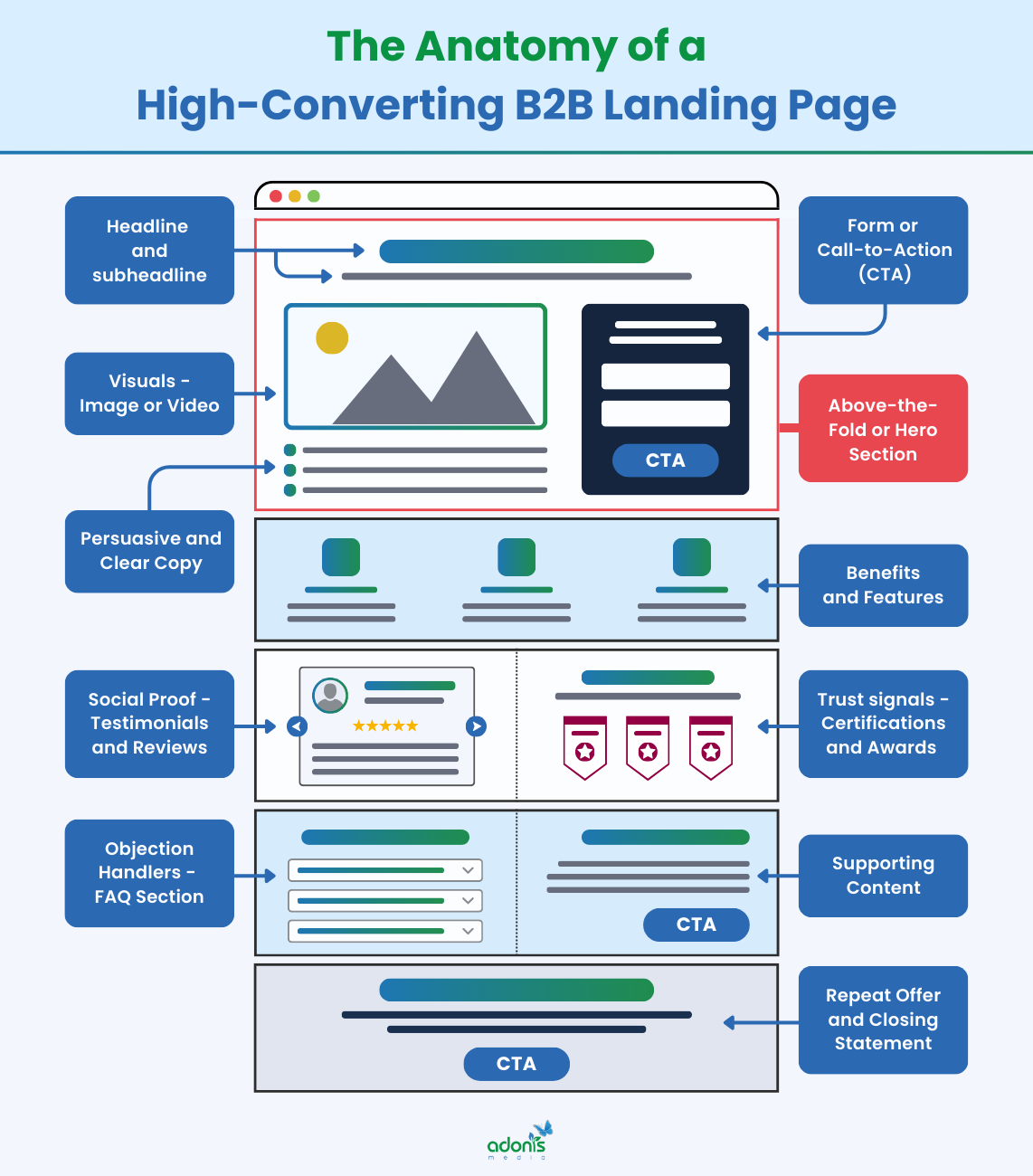
- Key elements of high-converting B2B landing pages include a strong headline and subheadline, clear persuasive copy, benefits and features, calls-to-action or forms, visuals, trust signals and social proof, supporting content or objection handlers, and repeat offer or closing statement with CTA.
- Best practices include keeping the design clean and simple, optimising for SEO, ensuring fast page loads, making pages mobile-friendly, and conducting regular A/B testing.
- Continuous testing and data-driven improvements help landing pages stay effective and increase conversion rates over time.
What Is a Landing Page?
A landing page is a single web page created for one main purpose, which is to get people to take action, such as signing up for a free demo, downloading a guide, or filling in a contact form. Every part of it is designed to guide the visitor towards that action.
It is the page where someone 'lands' after clicking on a search result ad, an email link, or a post on LinkedIn with action buttons like 'Sign up now', 'Learn more', 'Get started', and so much more.
A key indicator between a landing page and a homepage is how simple it is. A homepage usually has menus, links, and lots of choices for visitors, while a landing page removes those distractions. It cuts away navigation menus and extra links so that visitors can focus on the message and CTA or call-to-action.
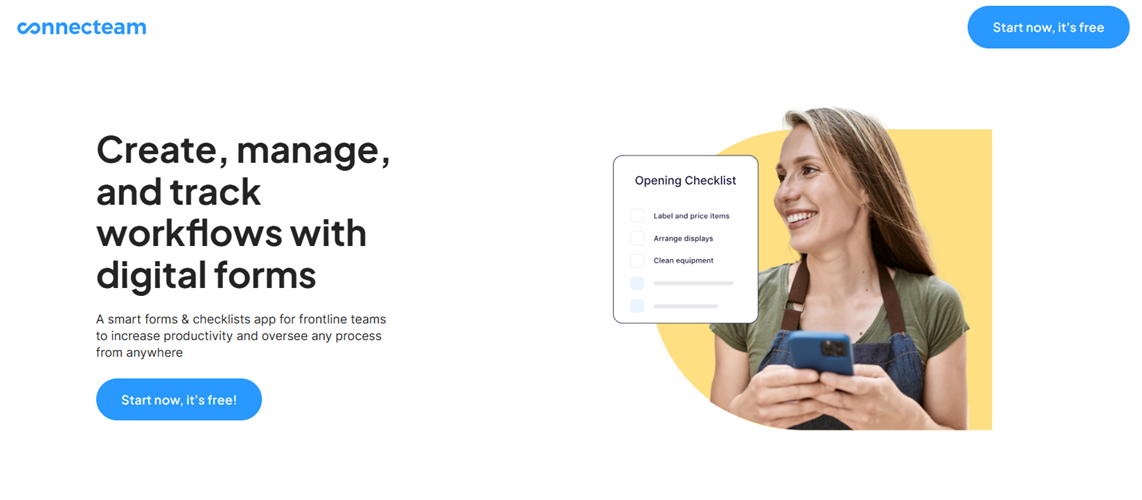
For example, Connecteam uses a landing page to help visitors take action quickly. The above-the-fold section has a clear and eye-catching headline and a follow-up subheadline. There are no extra menus or links, just a simple design that focuses on the offer and a CTA button.
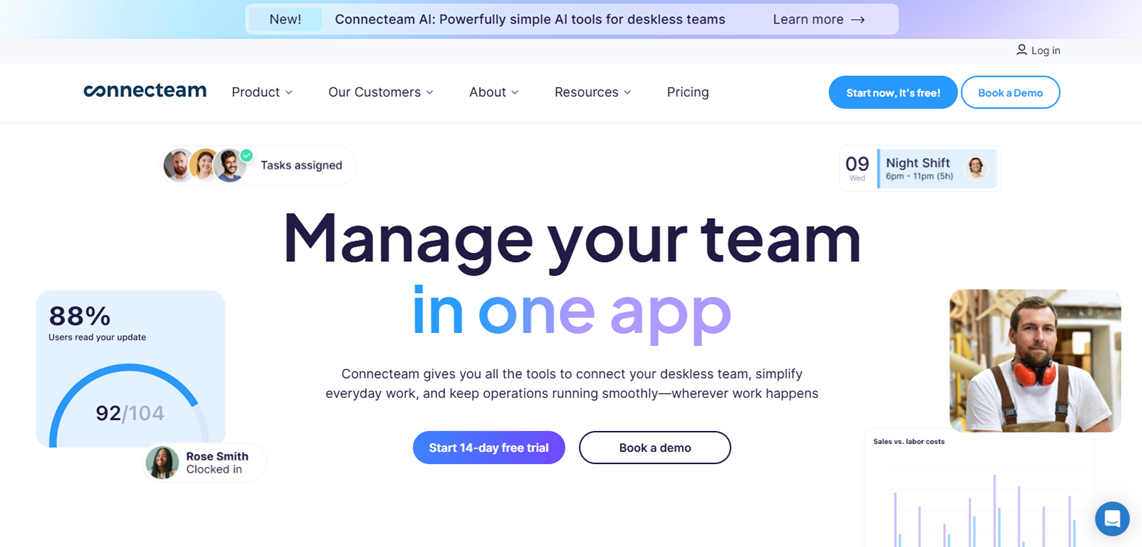
In contrast, their homepage has a menu at the top, different sections, and more information about the company.
Landing pages are often linked to campaigns or ads. For example, when someone clicks on a Google Search Ad about software for project management, they do not go to the company's homepage. Instead, they are sent to a landing page that talks about the software, shows benefits, and invites them to book a demo.
In short, a landing page is not about showing everything your business does. It is about one campaign, one offer, and one action. When done right, landing pages help businesses turn visitors into leads or customers.
Why It Matters in B2B Marketing
In B2B marketing, a landing page plays a huge role in turning interest into action about the offer. Businesses often create different landing pages, some designed to generate leads, while others focus on driving event sign-ups.
Let's also look at some of the most important reasons landing pages matter in B2B.
Driving Targeted Campaigns
Landing pages make B2B marketing campaigns far more targeted and effective. Rather than sending visitors to a broad homepage, businesses direct visitors to a page crafted specifically for the ad or campaign they clicked.
When campaigns and landing pages align, visitors are more likely to take the next step, whether that's signing up for a demo or downloading a guide.
For example, a B2B company running an ad for a software demo won't link to their homepage, showing all products. Instead, they send traffic to a page focused on that demo only, explaining its benefits and making it easy to book.
Measuring ROI More Accurately
One of the benefits of using landing pages in B2B is how easy it becomes to measure return on investment (ROI). A landing page is usually connected to a single campaign or offer, which makes tracking results much clearer.
For example, if a company spends on Google Ads and directs clicks to a dedicated page, marketing teams can see exactly how many leads came from that ad spend.
With these insights, businesses can make smarter choices. If a landing page is bringing in many qualified leads, a company may increase the ad budget. If another page is underperforming, they can test new copy, visuals, or calls-to-action.
Supporting Account-Based Marketing (ABM)
Account-Based Marketing is a common strategy in B2B. It means targeting a small number of accounts with personalised campaigns. Landing pages fit perfectly into ABM because they can be tailored to specific companies, industries, or even job roles.
And when discussing ABM, it's essential to remember the Ideal Customer Profile or ICP. The whole idea behind ABM is to focus your marketing efforts on very specific companies that fit your best customer profile, which also have the buyer personas, or the semi-fictional profile representing specific individuals involved in the buying process.
You can have multiple landing pages, and each one should speak directly to the buyer persona within that ICP, as different people in the same company may have different concerns. For example, finance teams care about cost savings, while IT teams focus on security and ease of use.
For example, we have Brevo, formerly known as Sendinblue, which is an all-in-one marketing platform designed to help businesses manage customer relationships and marketing efforts. Based on our observation, they use multiple landing pages to address the unique needs and priorities of each persona within their ICP.
 Website screenshot: brevo.com. Click to see the full landing page.
Their Brevo vs ActiveCampaign landing page is more about decision-makers comparing platforms based on features and pricing. This aligns with what a decision-maker, typically a medium-sized business or enterprise purchasing manager or senior marketer responsible for budgeting and tool selection, would want to know when choosing between platforms.
 Website screenshot: brevo.com. Click to see the full landing page.
On the other hand, Brevo Bulk Email landing page targets small business owners looking for a cost-effective, powerful bulk email solution. Its messaging focuses on AI-powered sending, ease of design with drag-and-drop, unlimited contacts, high deliverability, and scalability across plans.
This segmentation and tailored messaging reflect ABM best practices, where delivering relevant content to different personas within the ICP can improve engagement and conversions.
The Anatomy of a High-Converting B2B Landing Page
A landing page can be built quickly, but crafting one that truly converts requires careful attention to every detail. Success comes from combining the right words, visuals, and structure in perfect balance.
In B2B, where decisions often involve multiple people and a longer sales process, the landing page must be clear and persuasive. That's why it should quickly explain and show what you offer and why it matters, making it easy for visitors to say "yes" to the next step.
Let's explore the key elements that make B2B landing pages convert better.
1. Strong Headline and Subheadline
The headline, subheadline, a visual like image or video, your persuasive copy, and the main CTA are all located at the very top of the landing page, usually called the above-the-fold or hero section. Although some elements mentioned are optional for this section, the headline, subheadline, and CTA are non-negotiable.
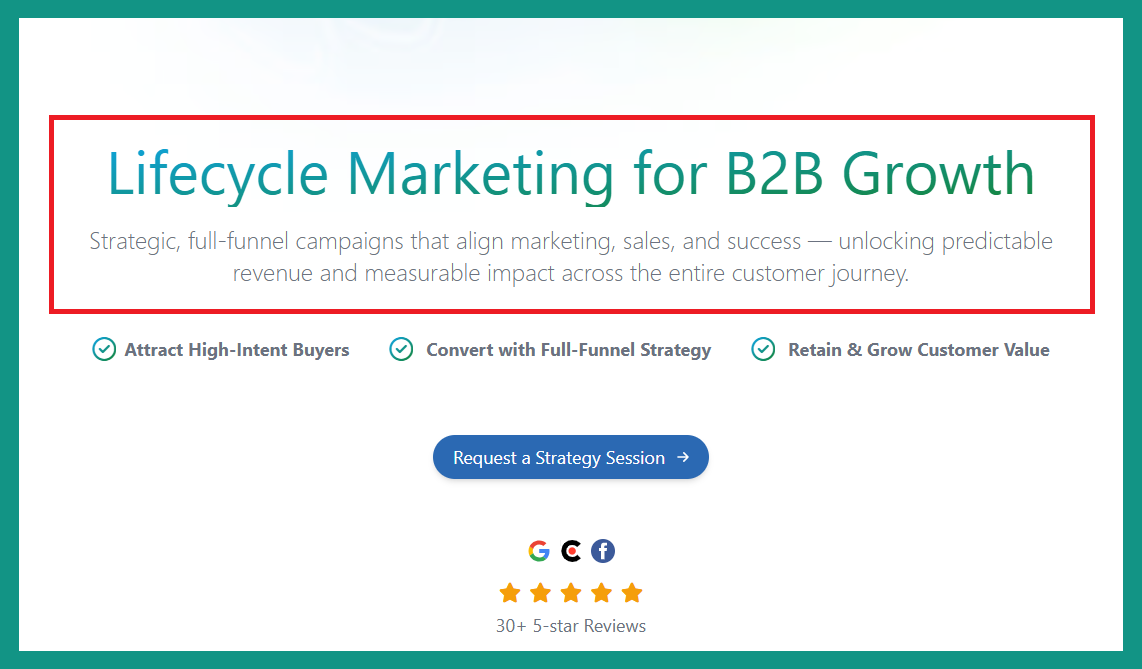
The headline should always be the very first thing website visitors see on your landing page. It sits at the top and is usually big enough to communicate immediately with your visitors, and needs to be clear and speak directly to the problem your business solves.
A headline works best when it's short and clear, typically between 4 and 10 words. Anything longer risks confusing your visitors before they even start reading.
Your headline should also set the tone for everything that follows. It should avoid vague or confusing words and instead be straightforward. For example, if your service helps businesses get funding quickly, say just that. Don't make visitors guess what you do.
The subheadline is the reason why your headline should be short: once your visitor is hooked by it, your subheadline follows to provide more detail and value. It supports the main message by adding detail that makes the offer clearer.
It should not be very lengthy, although they are composed of sentences. The font is somewhat smaller than the headline to balance their relevance on the landing page.
The subheadline is the perfect place to show your value proposition clearly. Your value proposition is the main reason someone should choose your product or service. It tells visitors what makes you different and why your offer matters to them.
2. Persuasive and Clear Copy
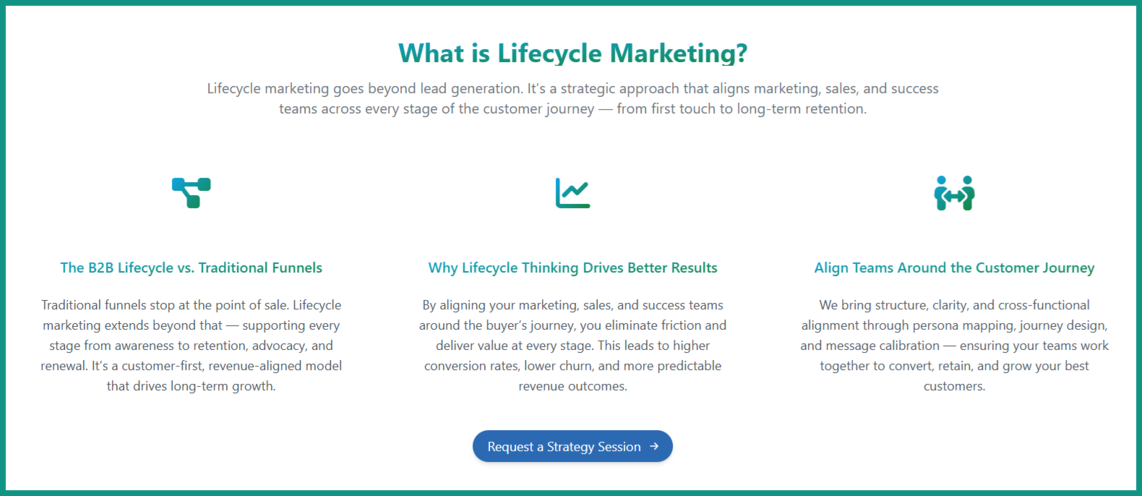
Once the headline and subheadline draw readers in, the page's copy does the work of convincing them. In B2B, copy should speak directly to the visitor's challenges or pain points and your value proposition if it's not stated on the subheadline clearly.
Focus on benefits or what the visitor gains rather than just listing features. For instance, instead of saying "Our software has reporting tools," say "Save hours with easy reports that show your team's progress."
Use short sentences, simple words, and organised sections to make the visitor interested. If possible, break the text into small chunks or paragraphs so it doesn't overwhelm them as well.
Your copy should act like a helpful conversation, answering questions and easing any concerns as they scroll down.
3. Clear Call-to-Action (CTA)
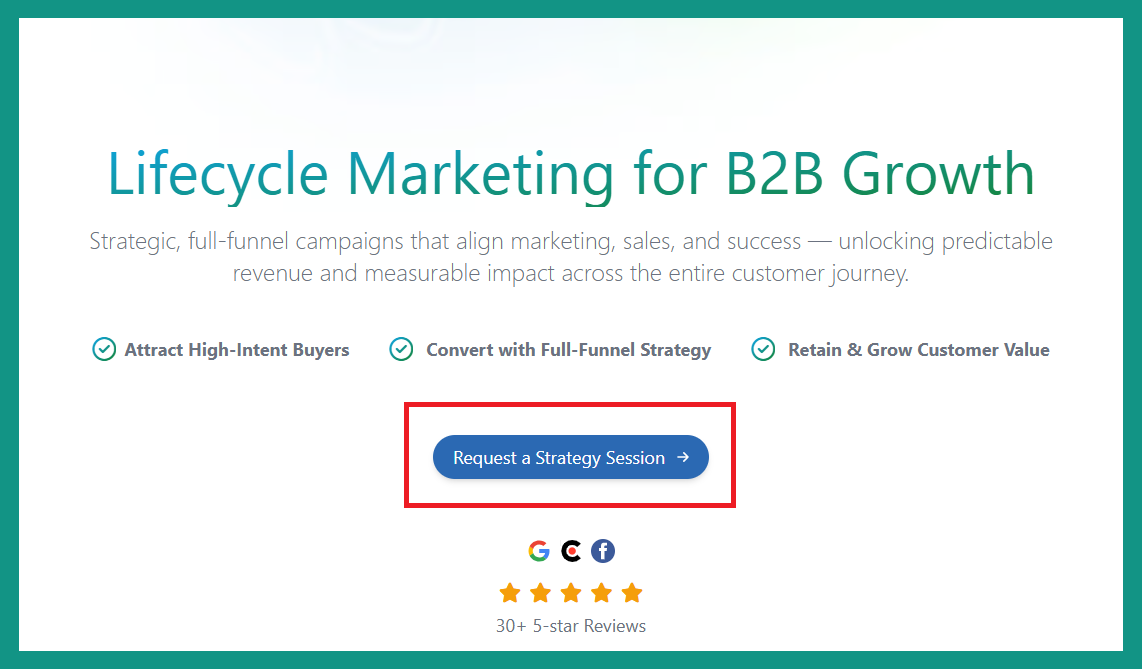
The call-to-action, or CTA, is the element in the above-the-fold section and near the headline and subheadline that you place on your landing page to call your visitors to take action. This is where you tell them what to do next, like "Get a Quote," "Apply Now," or "Start Your Free Trial."
Forms are also used to replace a CTA button. They should be simple and easy to complete, asking only for essential information to reduce friction, like first name and email. Long or complicated forms can discourage visitors from taking action.
Your CTA or forms should always stand out visually on the page. The most frequently used technique is a coloured button or box that catches the eye without being overwhelming, and the text on the button must be direct and easy to understand. Avoid vague phrases like "Submit" or "Click here" and instead use action words that show what happens next.
You also need to plan for the positions of your CTAs, so that visitors can easily find them without having to search the page. They are often placed near the top and again at the bottom or after important information.
If visitors aren't sure what happens next, they might hesitate. The CTA should remove any doubt and make the next step feel easy and worthwhile.
4. Benefits and Features
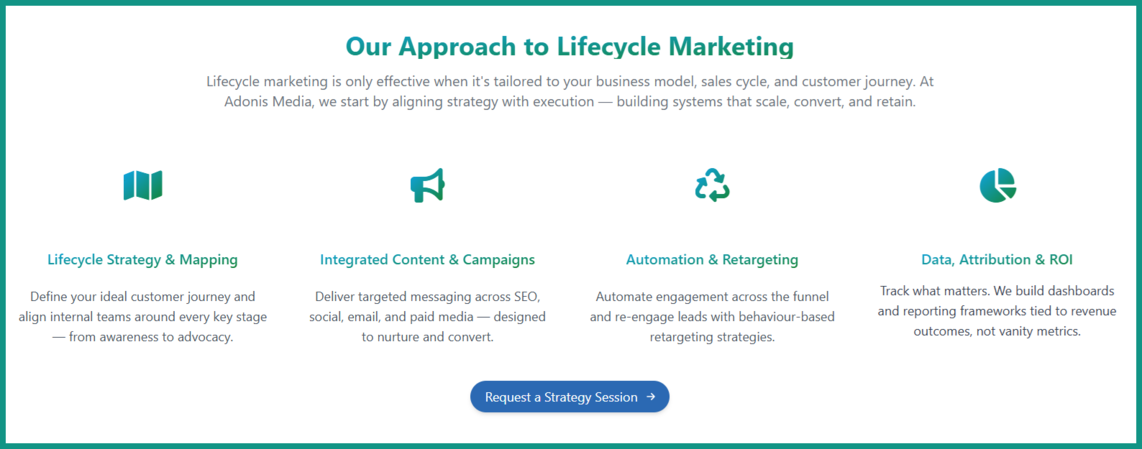
Your landing page should clearly show the benefits your business offers. Visitors want to know how your product or service can help them, so focus on what the value is for their company.
Instead of just listing features or technical details, discuss the tangible benefits your customers achieve, such as saving time, reducing costs, or obtaining faster approvals, which are more likely to capture attention.
The format of showing benefits and features varies depending on the design you want and your brand guidelines, but it should ideally be shown right after the above-the-fold or hero section so it can support the elements there.
When you explicitly show the benefits, use your brand tone or voice but avoid jargon or complicated phrases that might confuse readers. Instead, speak like you are explaining to a friend who wants to understand quickly.
5. Eye-Catching Visuals
Visuals are a game-changer on any landing page. If you were to read a plain one, you might lose interest, not because it doesn't meet your needs, but because it lacks the effort to hold your attention visually.
People don't just read words — they also look at photos, charts, and videos to quickly understand what you offer. That's why you need visuals that support your message but are still on brand.
Some use hero images behind their headline, subheadline, and CTA that are in context with their brand or with what is being offered. However, you can still put images or graphics to support your benefits and other sections or elements that need them, like social proof, for example.
Pictures of real people, like team members or clients, also help build trust. Faces add a human touch and make your company feel more approachable. If necessary, include images that show your team working or happy clients to make the page feel genuine.
Visuals aren't just videos and images. They also include your brand colours, fonts, and design elements. Using consistent colours and fonts helps create a strong, professional look that visitors recognise right away. These details support your message and make the page feel organised and trustworthy.
6. Trust Signals and Social Proofs
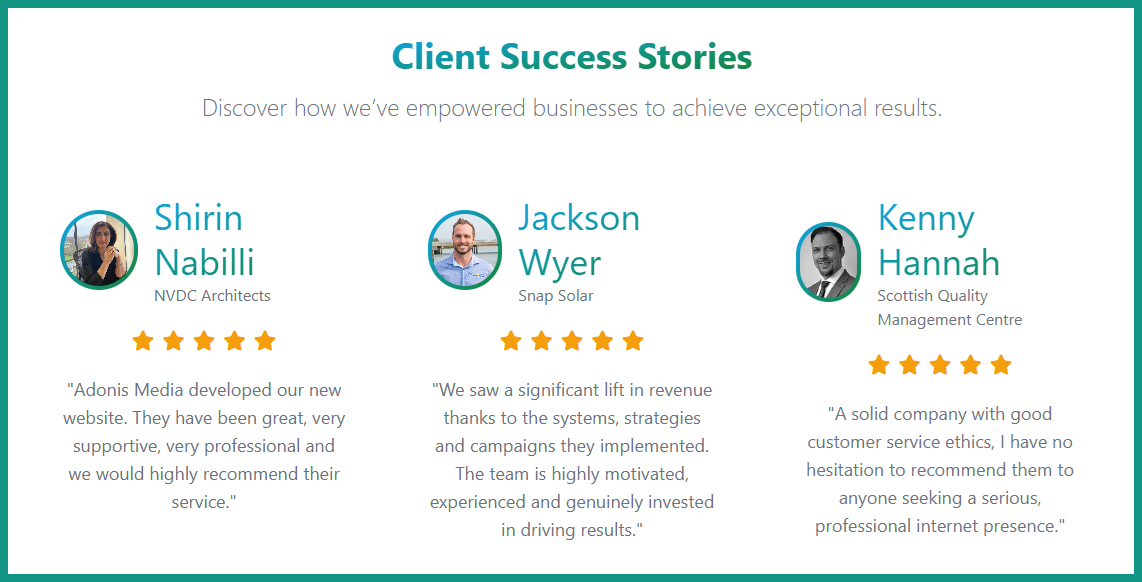
Trust is essential for any web page, including B2B landing pages. When other businesses visit your page, they immediately want to know they can rely on you, and this is where trust signals come in. They show proof that your company is credible and can deliver what you promise.
A landing page is not complete without social proof. These can be testimonials from happy clients who share their positive experiences. You can share their review, along with their photo, star ratings, and the names of the decision-maker and their company.
You can also use logos of well-known companies you've worked with. Seeing familiar names builds instant trust. Case studies are another way to share success stories, as they show how you helped a business solve a problem or improve results.
Other trust signals include awards, certifications, or media mentions. These highlight that your business meets high standards or has been recognised by others.
7. Supporting Content and Objection Handlers
When businesses visit your landing page, they likely have doubts or questions, which can prevent them from taking action or clicking your CTAs. That's why it's so important to include these to clear up these worries.
This section or element helps answer these concerns right on the landing page. This might include FAQs, short explanations, or comparison charts showing how your solution stands out.
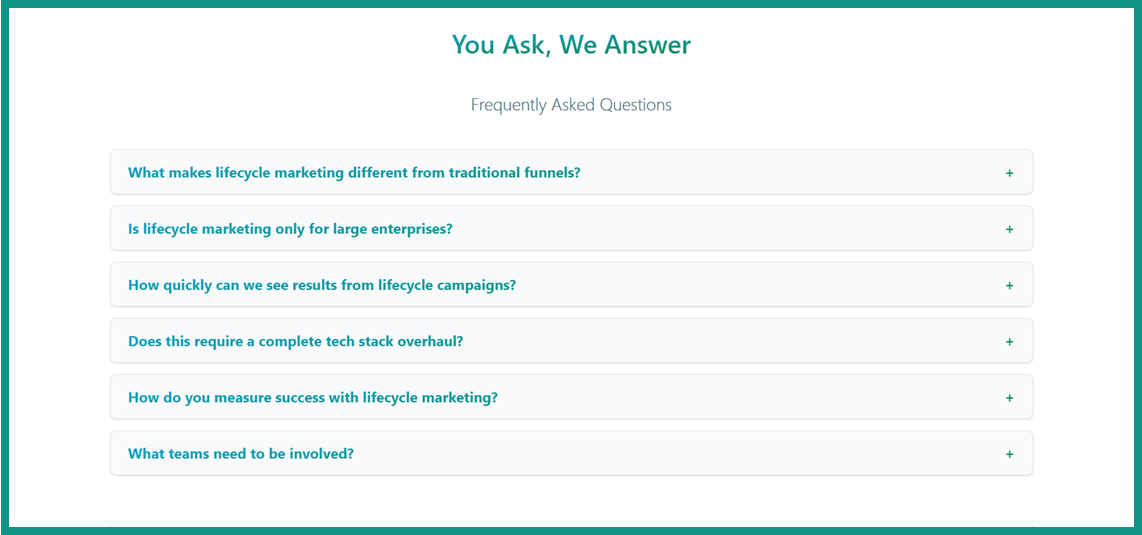
It should go in tandem with your benefits. While you show your value to your visitors and what they can get from your product or service, deliver what you think might hinder them from taking action through simple words and in a structured approach.
It doesn't have to be complicated, and it can be simple answers to common questions. For example, you might explain how your process works, what the costs are, or how quickly they see results.
8. Repeat Offer and Closing Statement
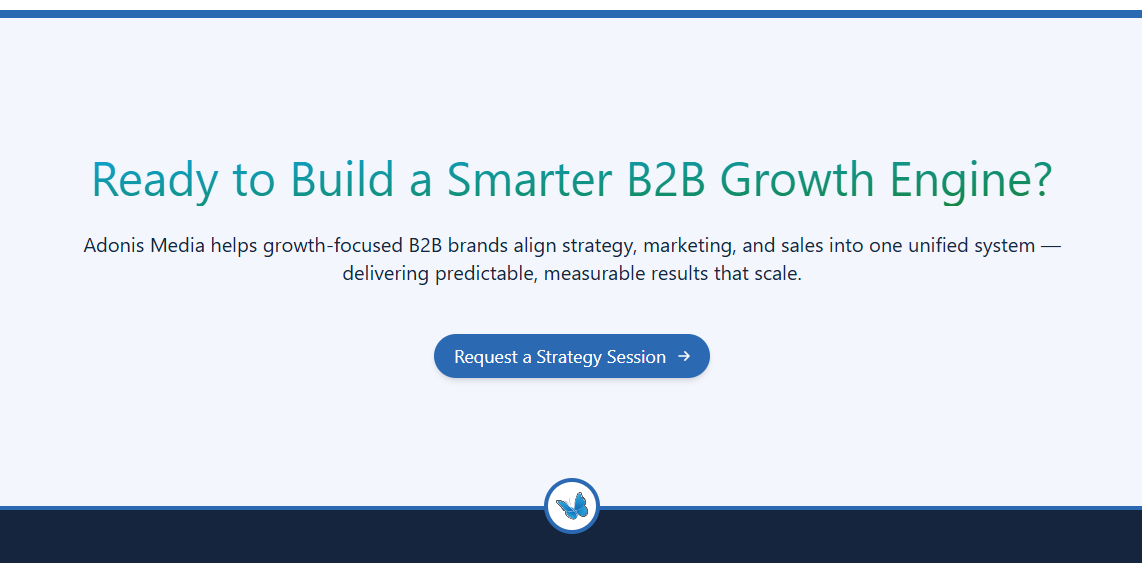
Closing your landing page with a short reminder of the offer before the footer section helps visitors remember why they came in the first place. This should be clear and concise, reinforcing the benefits and the action you want them to take.
A strong closing statement can also include a final encouragement or a sense of urgency, like "Get started today and boost your team's productivity."
If you'll use either of the two, it is best to pair it with a CTA button so they don't have to go back to the top again to click it, or to remind them of the action if there are still hesitations.
Landing Page Optimisation Best Practices
Creating a landing page is just the start. To get the best results, it needs to be simple, easy to use, and built with smart choices. Optimising your page means more people will see it and want to act.
Keep the Design Clean and Simple
A clean and good design helps visitors focus on what matters most — your offer. On a B2B landing page, too many links or distractions can pull people away before they take action. And if you have too many links, clickables, or offers, you lose the essence of the landing page itself.
When visitors arrive, they want to understand the page's purpose without getting lost quickly. A distraction-free design removes extra menus, sidebars, or other clickable elements that could lead them away. This way, their attention stays on your message and your CTAs.
When you create or edit your landing page, always remember to make it easy for visitors to move through the page naturally. Avoid too many colours, fonts, or images. Clear headings, short paragraphs, and enough white space help the eye rest and absorb information.
The layout should guide visitors' eyes toward the most important elements, like the headline and the call-to-action. Keep navigation and links to a minimum, so nothing distracts from your goal.
Optimise for SEO
Even the best landing page won't help much if people can't find it. Search engine optimisation (SEO) ensures your page appears when people are looking for solutions like yours. Use keywords that your target audience searches for, but keep the writing natural and easy to read.
Here's how to improve SEO:
- Use your main keyword in the page title, URL, headline, and a few times in the copy naturally.
- Write a clear meta description that sums up the offer and encourages clicks from search results.
- Use alt text for images that describe them and include keywords where relevant.
- Add internal links to related pages on your website to improve navigation and SEO juice.
- Keep URL structure simple and easy to read, avoiding long strings of numbers or symbols.
Ensure Page Loads Fast
It's essential that your website loads quickly. If your page takes too long to load, visitors might get impatient and leave before seeing what you offer. Even with every element we've mentioned above, you could lose valuable leads or sales because your page speed is poor and your website is loading too slowly.
Improve page speed by simply using smaller image files, limiting heavy scripts, and choosing a reliable hosting service. Many tools online can also help check your page speed and suggest fixes, like PageSpeed Insights, to check for your Core Web Vitals both on mobile and desktop websites.
Google also favours fast pages for search rankings. A quicker site can rank higher in search results, making it easier for new customers to discover you.
Experts agree that a typical visitor expects a page to load in under three seconds. Meeting this expectation can reduce bounce rates and boost conversions. If your page feels slow, it's worth investing time to make it faster and smoother for visitors.
Optimise for Mobile Visitors
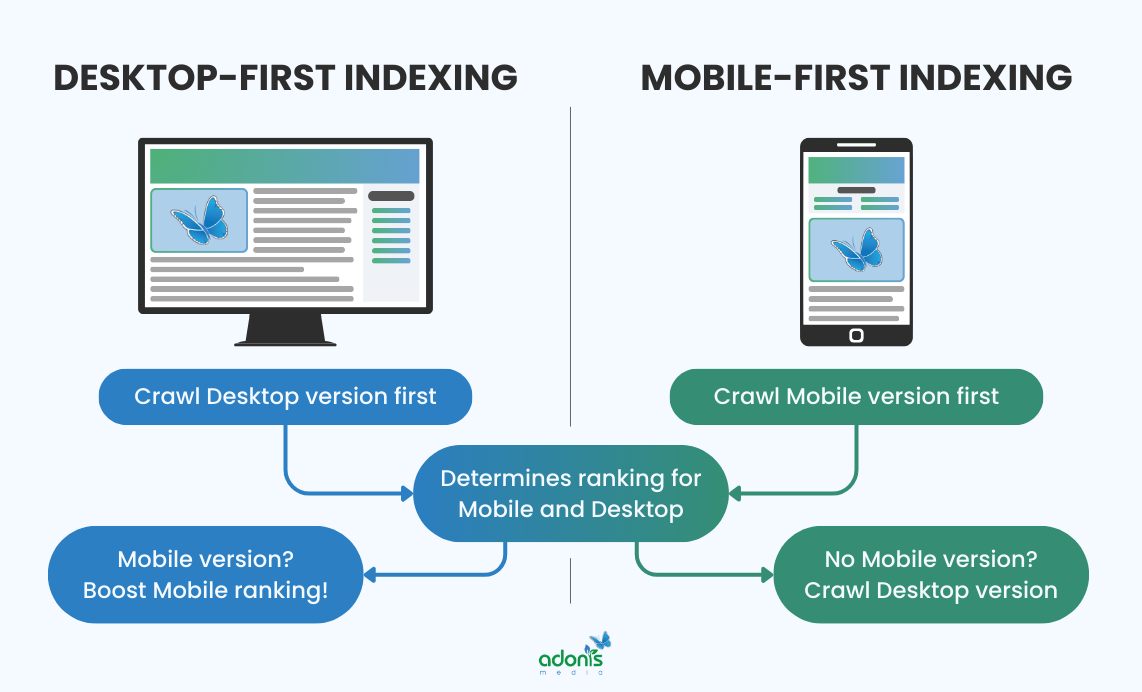
More people than ever use phones and tablets to browse the web, so they expect your landing page to work well on all devices. A mobile-friendly, responsive design ensures visitors have a smooth experience, no matter what type of screen they use.
When a page looks good and works properly on smartphones and tablets, visitors find it easier to read and engage. Text stays clear, buttons are easy to tap, and forms are simple to fill out. If your landing page isn't mobile-friendly, visitors may get frustrated and leave quickly.
It's not just for the sake of visitors or UX. Google also prefers mobile-friendly pages for its search rankings, which is called mobile-first indexing, making your page easier to find online. So, by focusing on mobile design, you boost both user experience and your searchability or SEO.
A/B Testing and Continuous Improvement
Testing different versions of your landing page can help you learn what works best. By changing one element at a time, like the headline or the call-to-action button, you can compare results to see which version brings more conversions.
Improving your page is an ongoing task. Data from tests and analytics shows what visitors prefer and where they get stuck. Using this feedback to make small, steady changes can steadily increase your conversion rates.
Landing pages should never stay the same for long. The best results come from regularly reviewing and refining each part of the page to keep it performing well as visitor needs and market trends evolve.
Further Learning
Looking to learn more? I've collected some fantastic resources that go hand-in-hand with this topic if you want to dive deeper.
- klientboost.com — 58 Landing Page Statistics w/ Sources [2025]
- blog.hubspot.com — 16 Landing Page Statistics For Businesses
- blog.hubspot.com — 8 steps to build your account-based marketing strategy [+ recommended tools]
- unbounce.com — 15 high-converting landing page examples (+ why they work)
- reddit.com — Reddit r/marketing Thread: "Difference between B2B and B2C Landing Pages?"
- reddit.com — Reddit r/digital_marketing Thread: "How do you come up with ad/landing page copy? Or SEO keywords?"
- browserstack.com — How fast should a Website Load in 2025?
Making Your Landing Page Work Harder
A high-converting B2B landing page brings clarity and trust to your visitors. It helps turn casual clicks into real business leads by focusing on what matters most to your customers. Taking care of these elements and optimising them over time will improve your results.
Final tip: always test your landing page. Small changes in headlines, images, or buttons can make a big difference. Keep learning what works best for your audience to get more leads and grow your business steadily.
Ready to boost your B2B leads? Book a free consultation with us today. We'll help you design a landing page that relates to your audience and drives real results for your business.
Got a question in mind? Check out the FAQs below for quick answers!
