
Every day, millions of businesses compete for attention online, but only a handful appear on the first page of search results.
The rest? They're practically invisible or on the second to last pages of one's search.
Without proper SEO, your brilliant products, outstanding services, and engaging content might never reach your target audience. Your website could be lost in search results, while your competitors attract the customers who should be finding you instead.
That's why we have this guide to break down everything you need to know about SEO.
Start building a strong online presence today that attracts more visitors and grows your business!
Key Takeaways
- SEO improves website visibility in search engines, helping businesses attract organic traffic without paying for each visitor.
- Its three main types are on-page, off-page, and technical SEO.
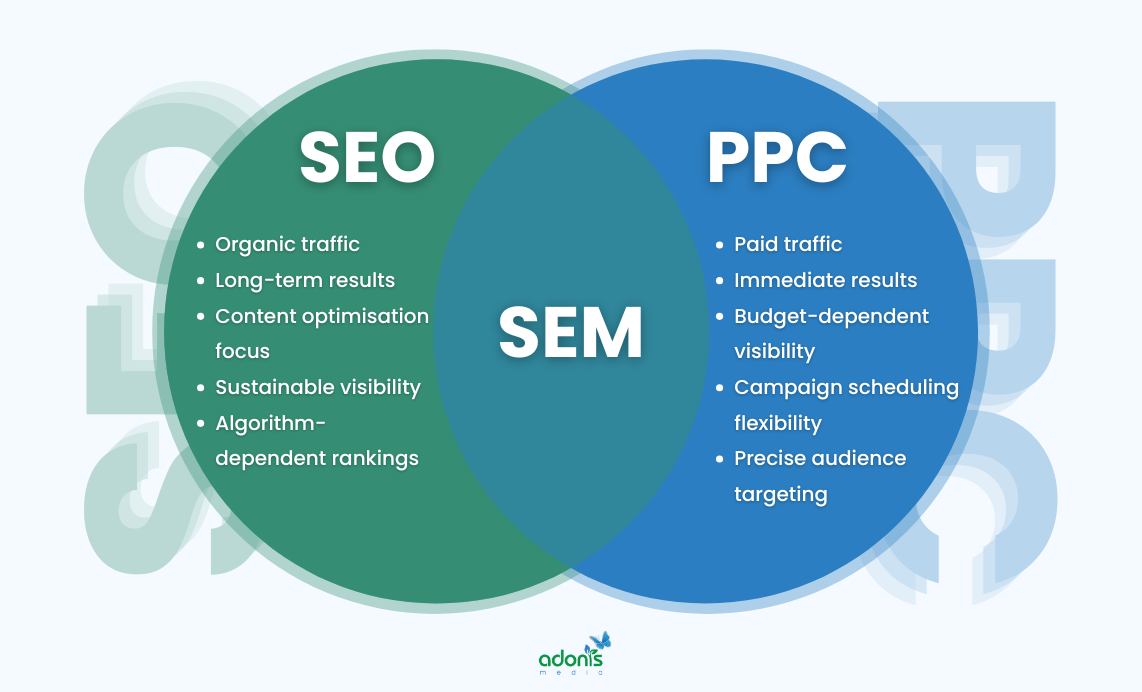
- SEO organically drives traffic, while PPC (pay-per-click) is by paying. A combination of the two is SEM or Search Engine Marketing.
- Search engines use crawling, indexing, and ranking processes to evaluate and organise web content for users.
- A successful SEO process starts with keyword research and analysis, optimises content and website, and builds backlinks to rank higher in search results.
- Effective keyword research is crucial for targeting user intent and creating relevant content that ranks well.
- AI transforms SEO through automated analysis, content optimisation, and predictive insights for better decision-making.
- Backlinks remain a top ranking factor; focus on quality over quantity by building genuine industry relationships.
- Staying updated with SEO changes, like Google's E-E-A-T guidelines, ensures your strategies remain effective over time.
What Is SEO?
Let's say you have a fantastic website, but nobody knows or visits it. That's where SEO comes in!
It's like having a skilled navigator who helps people find your website through search engines, making your online presence truly shine.
But what is SEO anyway?
SEO stands for search engine optimisation (or search engine optimization in US English). It's also known as organic search marketing, SEO marketing, or SEO optimisation (an awkward one) — all referring to the process of improving your website's visibility in search engines.
SEO works by aligning your website with search engines' definitions of good search results. By optimising your content, website structure, and online presence, search engines can better understand and present your pages to users searching for relevant information.
Unlike paid advertising, SEO creates sustainable results through organic traffic that continue working for your business long after implementation.
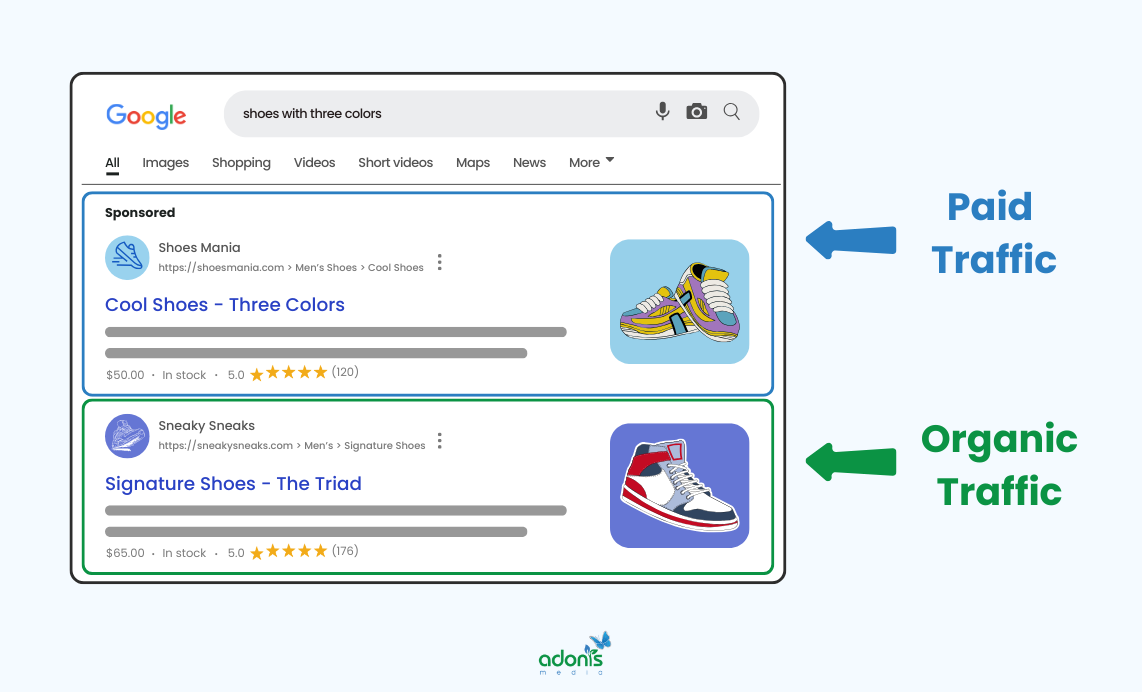
Search engines use complex processes to rank results to provide users with the best search experience. They analyse factors like content quality, website structure, user experience, and the number of other websites linking to yours.
SEO is not a new word or marketing practice. It started in the mid-1990s, with the term first appearing in 1997. It began when website owners noticed they could influence search engine results by adjusting their content and website structure to rank higher in search results.
Well, one can say that SEO isn't relevant anymore, but statistics won't lie. Ahrefs shares the following statistics about SEO:
- 68% of online experiences start with search engines
- It operates 1,000%+ more traffic than organic social media
- 60% of marketers say inbound practices, which include SEO, provide their highest quality leads
- 92.96% of global traffic mainly comes from Google (Google Search, Google Maps, and Google Images)
- 39% of consumers or buyers are greatly influenced by a relevant search
From its humble beginnings to today, SEO remains the most reliable way to build lasting organic traffic and earn visitor trust.
SEO vs PPC vs SEM: What's the Difference?
Digital marketing has many related terms like SEO, PPC, and SEM. Some people think that SEO and SEM are the same, but there's a slight difference between the two. PPC? Well, it's very different even in terms of naming convention.
SEO
Once again, SEO stands for Search Engine Optimisation and focuses on improving your website's visibility in organic search results without paid advertising.
SEO involves creating quality content, optimising website structure, and building authority through backlinks to naturally earn higher rankings in search results.
If it's SEO, always think about organic website traffic.
You may also think of SEO as growing a garden. You plant seeds (content), nurture the soil (website), and wait patiently for organic growth — literally organic. It takes time, but the harvest is worth it.
PPC
Pay-per-click advertising, or PPC, is an approach in which you pay each time someone clicks on your online advertisement.
PPC offers immediate visibility by placing your ads at the top of search results, but you'll need to pay for every visitor who clicks through to your website.
PPC advertising is easily spottable because it is placed at the top of search results and marked "Sponsored," "Ad," or "Promoted."
Key aspects of PPC campaigns:
- Instant visibility in search results
- Precise targeting options
- Controlled daily budgets
- Measurable results
Like buying ready-grown plants for your garden, you get instant results, but you'll need to keep paying to maintain your garden's appearance.
SEM
Search Engine Marketing, or SEM, is the term that covers both paid and organic search marketing strategies.
SEM uses a mix of SEO and paid advertising to boost your website's presence in search results, helping you reach more potential customers through various search marketing tactics.
That's the simplest definition of it. So, in a nutshell:
- SEO drives traffic from search engines organically.
- PPC drives traffic from search engines by paying.
- SEM drives traffic from search engines both organically and by paying.
Benefits of SEO
Now that you know what SEO is and what makes it different from paid marketing, let's explore how it can help your marketing efforts and online presence.
Cost-Effective Marketing Strategy
SEO helps you reach potential customers actively searching for your products or services without paying for each click or impression like traditional advertising. It is your best option if you want to maximise your marketing budget while building a long-term online presence.
Unlike paid advertising, which stops generating results when you stop paying, SEO continues to bring in traffic and leads long after your initial investment.
The content you create and optimise keeps working for your business 24/7 and becomes a sustainable source of visitors and potential customers.
Drives Organic Website Traffic
When your website ranks well in search results, you attract visitors who are actively looking for information, products, or services related to your business. These visitors are more likely to engage with your content and convert into customers because they found you through their own search.
Organic traffic from SEO is more sustainable than paid advertising because it continues to flow even after you've optimised your content. This creates a steady stream of potential customers without the ongoing costs associated with paid advertising campaigns.
It's worth noting that, until today, the top traffic source for all websites has been organic search.
Improves User Experience (UX)
First things first: SEO doesn't only revolve around keywords and backlinks.
When you optimise your site's structure, speed, and navigation, users can quickly access information and complete their desired actions without frustration.
Positive user experience directly impacts key metrics like bounce rates, time on site, and conversion rates. Users who find your website helpful and easy to use are more likely to return and even recommend it to others.
Builds Trust, Credibility, and Authority
Let's be honest. We are more confident in getting information or answers from the first page of search results because Google wouldn't recommend them if they're sharing incorrect information, right? Yes, count me in.
When your website consistently appears at the top of search results, of course it builds credibility with your target audience. Users generally trust websites that rank well in search engines, viewing them as more reliable sources of information.
A strong SEO presence helps establish your brand as an industry authority through high-quality content, technical excellence, and positive user signals. This authority translates into increased trust from both users and search engines.
Brand Awareness and Recognition
With over 5 billion internet users worldwide, having a strong search presence puts your brand in front of potential customers actively looking for your products or services. There are various options to boost brand awareness, but let SEO do most of the work.
SEO helps your brand become more visible and memorable to your target audience. When your website consistently appears in search results, users begin to recognise and trust your brand, making them more likely to choose you over competitors.
Measurable Results and ROI
SEO provides clear, trackable results that show how your marketing efforts translate into business growth. Unlike traditional advertising, you can measure exactly how many visitors, leads, and sales come from your SEO activities using various tools.
Companies can track SEO success through metrics such as organic traffic growth, conversion rates, and overall revenue generation.
SEO's ROI typically ranges from 300% to 500%, and most businesses start seeing significant returns after 6 to 12 months of consistent SEO effort.
Types of SEO
SEO has different types that need to work together. From laying the foundation to adding the finishing touches, understanding these different types of SEO helps you create a complete strategy that attracts and keeps visitors coming back.
On-Page SEO
For a better understanding, let's have a sample scenario.
Meet Kiennah, who runs a cosy bakery in London. She wants her website to effectively showcase her delicious cakes and pastries, so she starts by optimising its content and structure. This is where on-page SEO starts.
On-page SEO refers to optimising individual webpages to rank higher in search results and earn more relevant traffic. It focuses on a page's content and HTML source code that can be optimised.
This type of SEO gives you direct control over your website's content and how search engines understand it. Keywords are necessary for this SEO type to target the searchers' intent and place it on some webpage elements such as title tags, meta descriptions, and header tags.
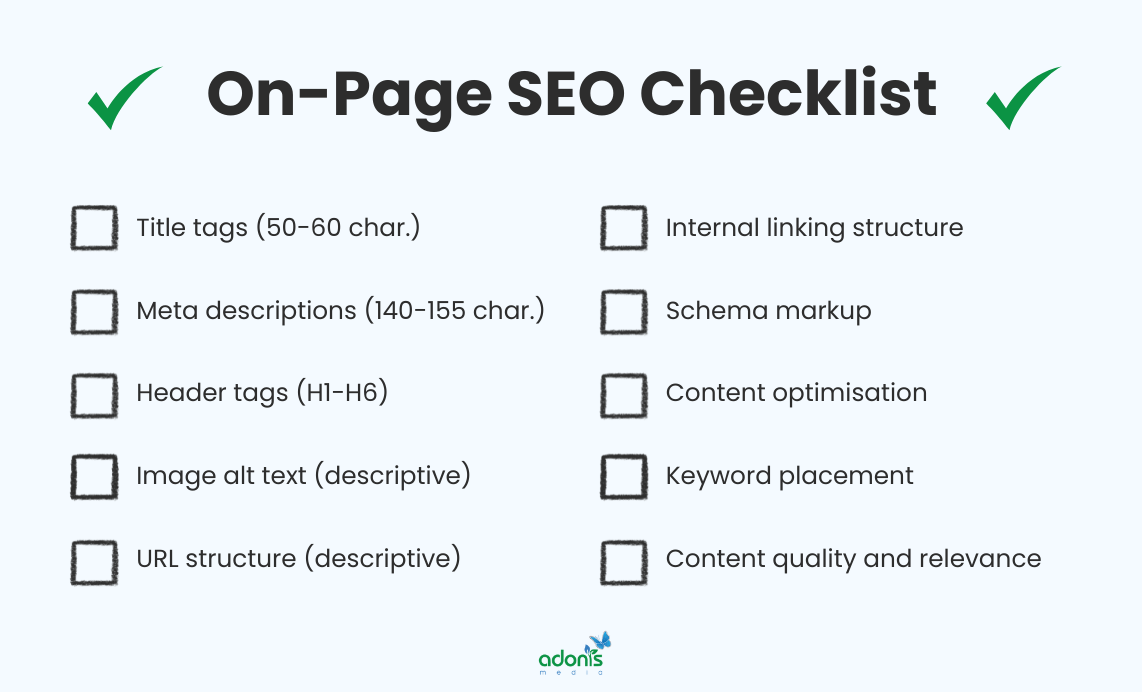
Essential on-page elements and ideas to consider:
- Title tags (should be 50-60 characters)
- Meta descriptions (should be 140-155 characters)
- Header tags (H1-H6)
- Image alt text
- URL structure
- Internal linking structure
- Content optimisation
- Schema markup
- Keyword placement
- Content quality and relevance
When optimising your pages, focus on creating content that answers your audience's questions naturally. Rather than stuffing keywords, write as if you're having a conversation with your customers.
Although keyword density is still relevant today, search engines now prefer content that can be read naturally and provides value. So, strategically and naturally place them on your pages.
Off-Page SEO
Continuing with Kiennah's bakery, she needs other websites and food bloggers to talk about her delicious treats, share her recipes, and recommend her bakery to their readers. Yes, she knows and will do off-page SEO.
Off-page SEO refers to actions taken outside your website to impact your rankings within search engine results pages. It's about building your site's reputation and authority through external sources.
This type of SEO helps search engines understand how the rest of the internet views your website. When reputable sites link to yours, it's like getting recommendations from trusted friends in the digital world.
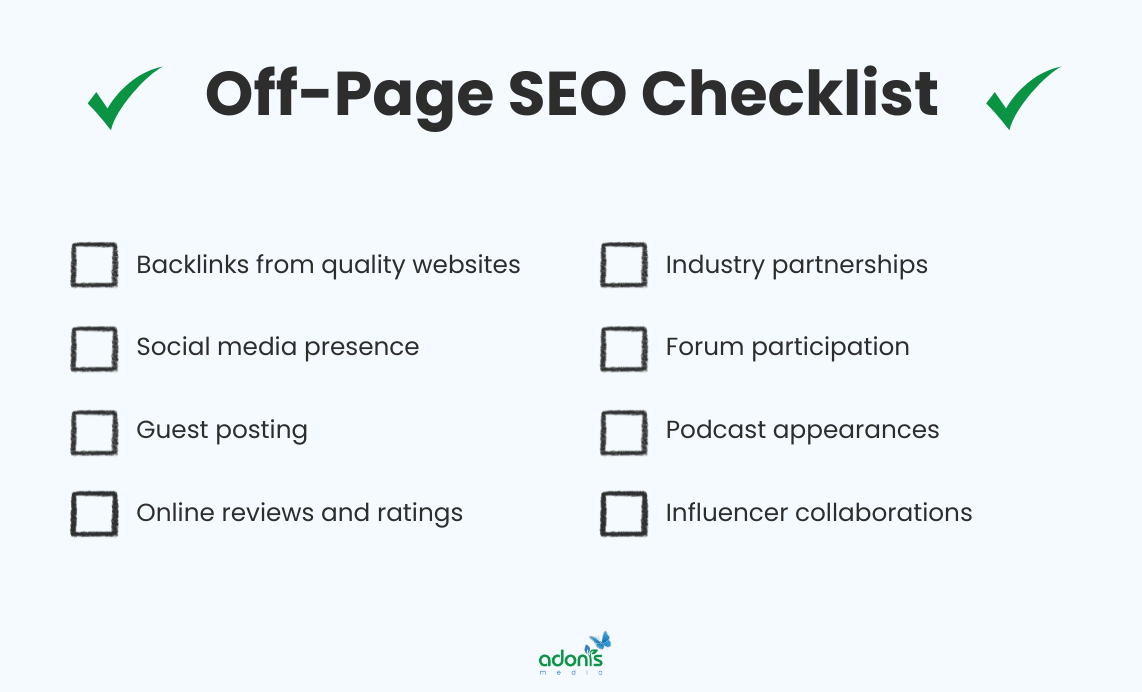
Key practices for off-page SEO:
- Backlinks from quality websites
- Social media presence and signals
- Guest posting
- Online reviews and ratings
- Industry partnerships
- Forum participation
- Podcast appearances
- Influencer collaborations
It is essential to note this one: don't force backlinks! Focus on building genuine relationships within your industry rather than chasing quick backlinks.
Create share-worthy content that naturally attracts links, and engage with your community through social media and industry events to build authentic connections.
Technical SEO
Now, Kiennah needs to ensure her bakery website loads quickly and works smoothly, just like how her kitchen equipment requires regular maintenance to serve customers efficiently. Technical SEO is on the move!
Technical SEO focuses on improving the technical aspects of your website to help search engines crawl and index your pages effectively. It's the foundation that makes your website work properly for both users and search engines.
Think of technical SEO as the plumbing and wiring of your website. Visitors don't see it directly, but they can immediately notice when something isn't working right.
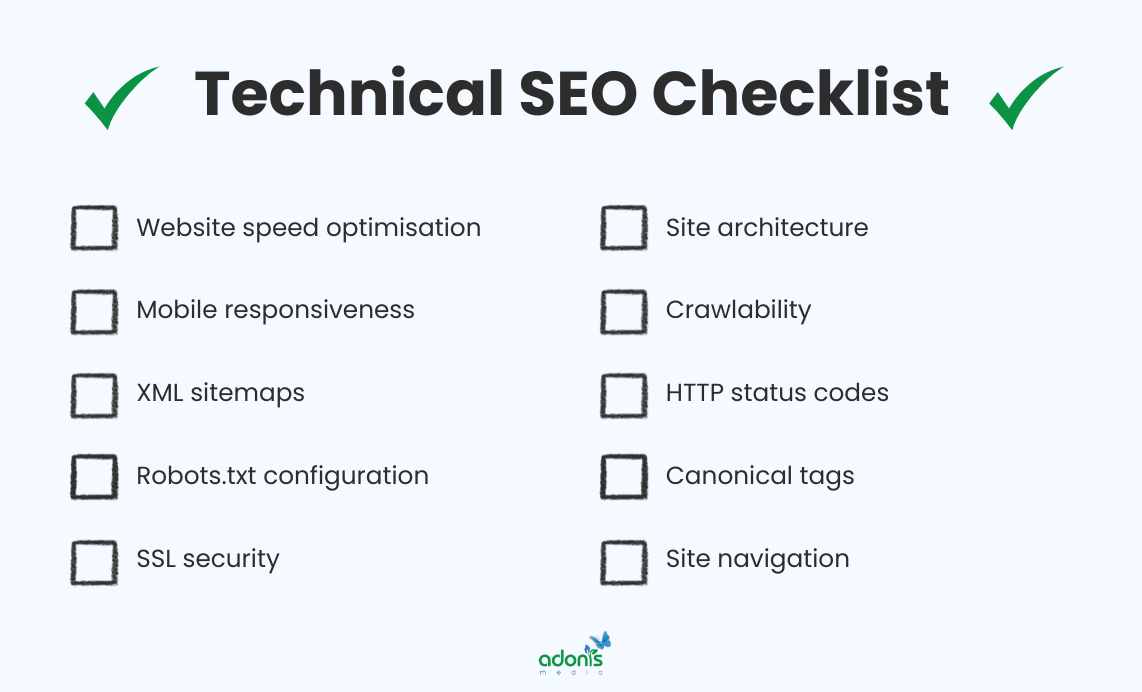
Technical SEO elements and ideas to consider:
- Website speed optimisation
- Mobile responsiveness
- XML sitemaps
- Robots.txt configuration
- SSL security
- Site architecture
- Crawlability
- HTTP status codes
- Canonical tags
- Site navigation
Start with a technical SEO audit to identify issues affecting your website's performance. Focus on fixing critical issues first, like page speed and mobile optimisation, as these directly impact user experience and search rankings.
How Search Engines Work
Now we know the basics of SEO. That being said, if we want to know how our content can rank on search engines, we also need to know how search engines can rank our content.
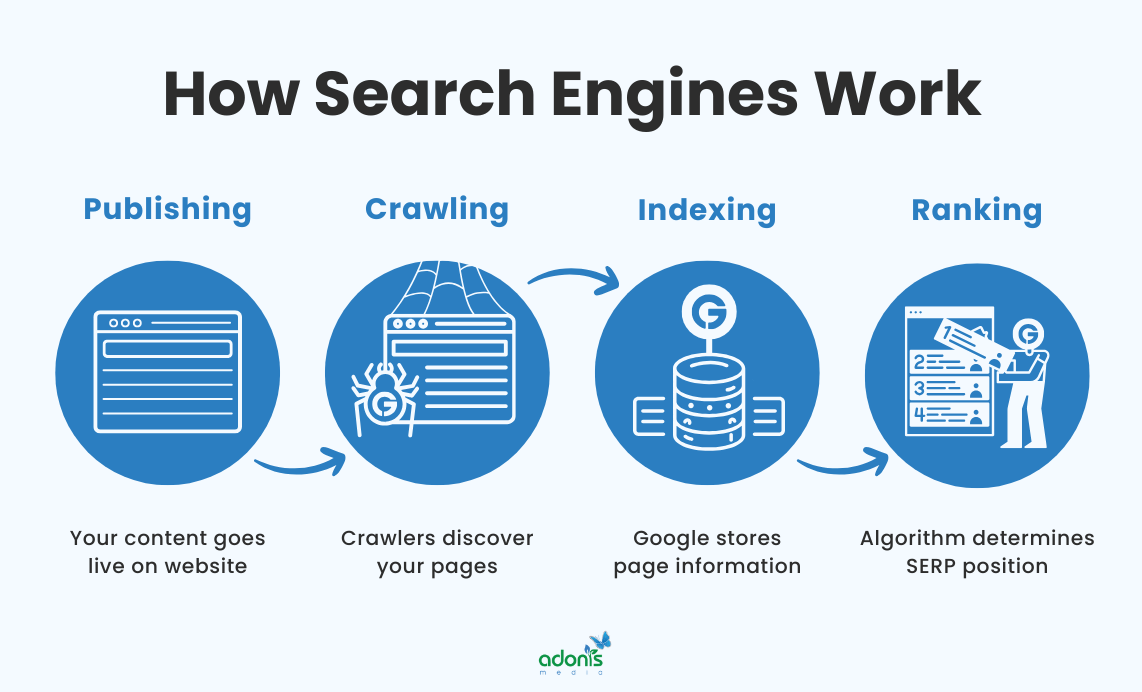
Search engines act like librarians of the internet, constantly organising and cataloguing billions of webpages to help users find exactly what they're looking for. Understanding how they work enables you to create content and websites that these digital librarians can easily see, understand, and recommend to users.
Crawling
Crawling is the first step of the process, where search engines send out digital robots (called crawlers or spiders) to discover and scan webpages across the internet. These bots follow links from page to page, collecting data about each webpage they find.
Key crawling terms to remember:
- Crawler/Spider: Automated bot programs that discover and scan webpages
- Crawl Budget: The number of pages search engines will crawl on your site within a given timeframe
- Robots.txt: A file that tells search engines which pages they can and cannot crawl
- Crawl Depth: How many clicks deep crawlers will go from your homepage
- XML Sitemap: A file that lists all important pages on your site for crawlers to find
- Crawl Errors: Issues that prevent search engines from accessing your content properly
- Crawl Rate: How quickly search engines scan your website's pages
Search engines use sophisticated algorithms to determine how often to crawl your site and which pages to prioritise. The more important and frequently updated your content is, the more often search engines will crawl it.
Indexing
Indexing is the next step after crawling, where search engines process and store information about your webpages in their massive database.
It's like filing documents in a digital library where each page is analysed and categorised based on its content and purpose.
Key indexing terms to remember:
- Index Status: Whether a page is included in search results
- Noindex Tag: Code that tells search engines not to include a page in search results
- Canonical URL: The preferred version of a page when similar content exists on multiple URLs
- Index Coverage: Report showing which pages are indexed and which have issues
- Fresh Content: New or updated content that triggers re-indexing
- Duplicate Content: Similar or identical content appearing on multiple pages
- Index Bloat: When too many unnecessary pages are indexed
- Meta Robots Tag: Code that controls how search engines handle specific pages
- Indexability: How easily search engines can process and store your content
Search engines analyse various elements during indexing, including text content, images, videos, and metadata, to understand each page's content and determine when to show it in search results.
Ranking
Ranking is the last step in which search engines determine the order of search results, placing the most relevant and high-quality content at the top of search engine results pages (SERPs).
Key ranking terms to remember:
- Organic Position: A webpage's unpaid position in search results
- SERP Features: Special search result elements like featured snippets or knowledge panels
- Click-Through Rate: The percentage of users who click on a specific result
- Core Web Vitals: Technical metrics that influence ranking
- Universal Search: Integration of different content types in results
- E-E-A-T: Experience, expertise, authoritativeness, and trustworthiness signals
- Search Intent: The purpose behind a user's search query
Search engines use complex algorithms to evaluate hundreds of factors when determining rankings, including content relevance, website authority, user experience, and technical performance.
The higher you rank, the more likely users are to see and click on your result, with the top position getting approximately 10 times more clicks than the tenth.
SEO Process
This time, you need to apply everything you have learned above. Let's now turn that basic knowledge into practical application of SEO to your marketing strategy and online presence.
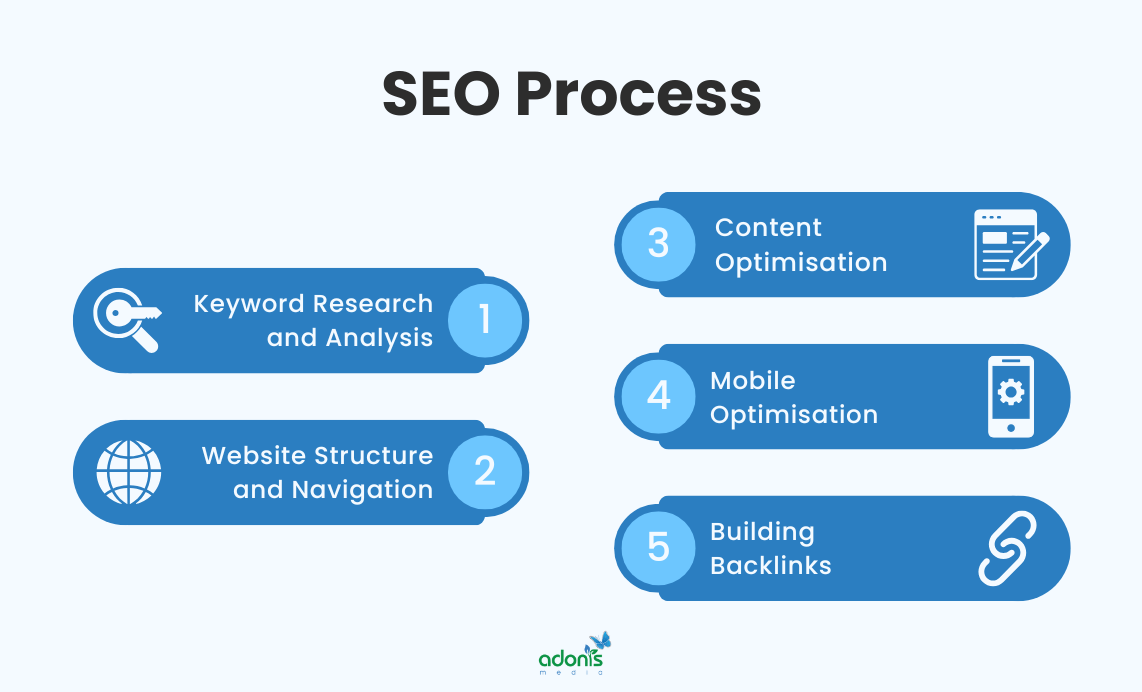
1. Keyword Research and Analysis
Before you become an SEO specialist, or even until now, you are a searcher. You search words and phrases on Google based on what you want and need, and you're happy when the first-page results give what you expected. That's the essence of keywords in SEO.
Keyword research is about discovering the exact words and phrases that connect you with your target audience.
Proper keyword research forms the foundation of your SEO strategy which will help you create content that matches what your potential customers are searching for.
Without it, it will look like you're just trying to navigate without a map.
There are several tools that can help with keyword research, including Google Keyword Planner, Semrush, Ahrefs, Moz Keyword Explorer, and AnswerThePublic. Each offers unique features to help you understand search patterns and identify opportunities.
Important keyword metrics to understand:
- Search Volume: Average monthly searches for a keyword
- Keyword Difficulty: How hard it is to rank for a specific term
- Cost Per Click: Average cost for paid ads using this keyword
- Click-Through Rate: Percentage of searchers who click results
- Search Intent: Purpose behind the search (informational, commercial, etc.)
- Keyword Trends: Seasonal patterns and long-term popularity
- Related Keywords: Similar terms people also search for
- Long-tail Variations: More specific, longer keyword phrases
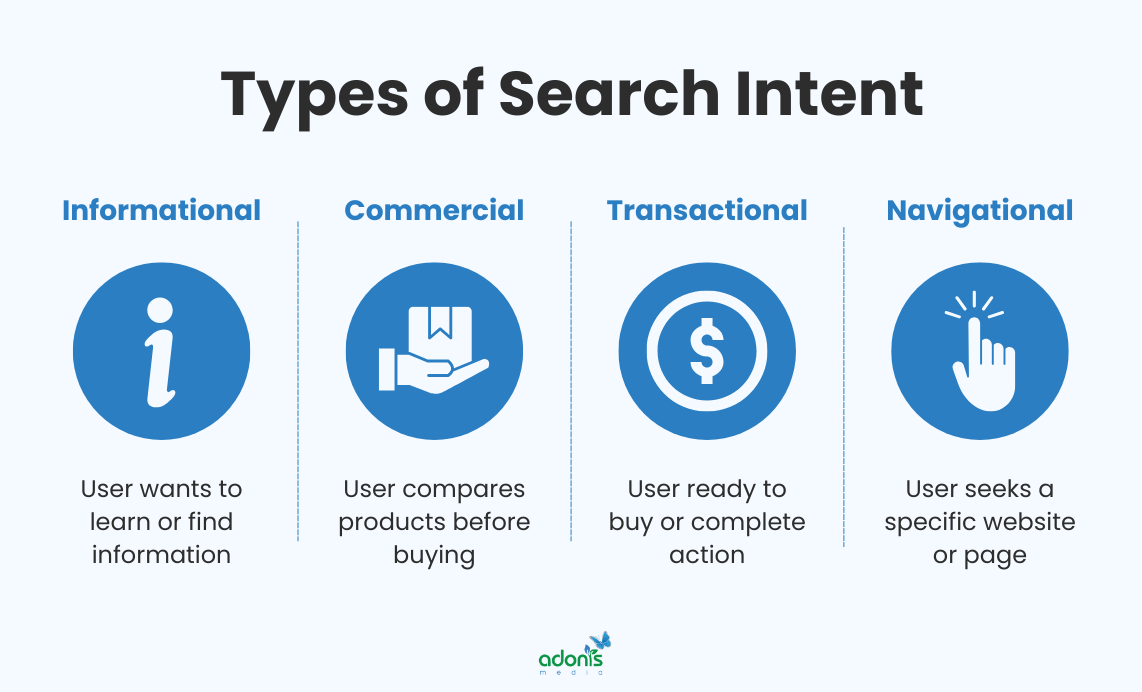
While we're on the topic of keywords, you'll need to understand search intent and its four main types: the informational, commercial, transactional, and navigational intent.
Simply put, it's the 'why' behind someone's Google search. Getting this right is important for keyword research, as it helps you select the perfect supporting words to pair with your core keywords.
When someone wants to learn something new or find answers to their questions, that's informational intent at work. On the other hand, commercial intent shows up when they're weighing options before committing to a purchase.
Spotted someone ready to buy, sign up, or take a specific action? That's transactional intent. And when they're hunting for a particular website or page they already know about, they're displaying navigational intent.
When conducting keyword research, focus on finding terms with the right search volume and competition balance. Look for keywords that align with your content capabilities and business goals rather than just chasing high-volume terms.
You can also use keywords with low keyword difficulty and low search volume. It's good practice to rank on keywords with low competition. No one knows if that specific keyword will become a trend after months or years. You're a lucky one if that happens!
2. Website Structure and Navigation
A clear website structure directly impacts your SEO success by helping search engines understand the hierarchy and relationships between your pages. This understanding helps search engines determine which pages are most important and how they relate to each other.
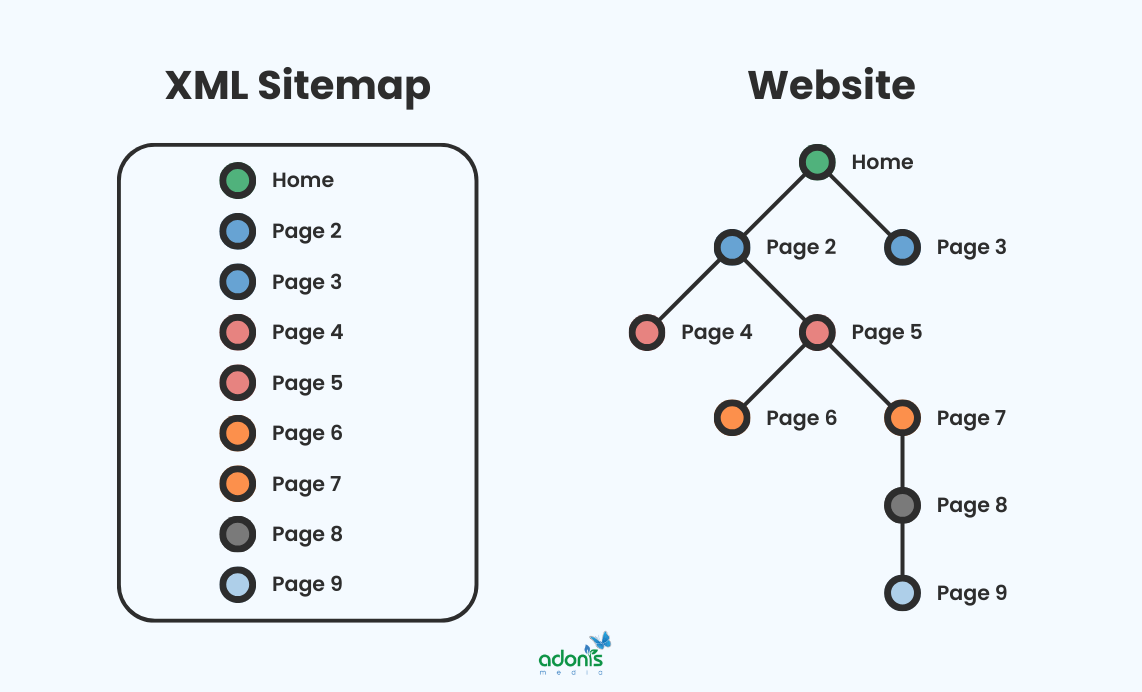
Creating an effective website structure requires tools like visual sitemap generators, analytics software, and heat mapping tools. To implement a clear navigation system, you'll also need basic knowledge of information architecture, user experience principles, and HTML.
Essential elements of good website structure:
- Clear hierarchy with no more than three levels deep
- Logical URL structure that reflects your site's organisation
- Internal linking that connects related content
- Breadcrumb navigation for larger sites
- Simple, intuitive main navigation menu
- Mobile-friendly menu design
Keep your most important pages within three clicks from the homepage, and use descriptive navigation labels that clearly tell users what they'll find. This helps both visitors and search engines understand your site's organisation.
3. Content Optimisation
Optimising your content is crucial because it helps search engines understand what your pages are about and determines whether your content matches what users are searching for.
Well-optimised content increases your chances of ranking higher in search results.
Essential tools for content optimisation include content analysis tools like Yoast SEO, Clearscope, or Surfer SEO, along with readability checkers and grammar tools. You'll also need skills in writing, editing, and understanding user intent to create content that resonates.
Key aspects of content optimisation:
- Strategic keyword placement in titles and headings
- Natural language flow and readability
- Proper heading structure (H1-H6)
- Engaging meta descriptions
- Optimised images and multimedia
- Internal linking strategy
As mentioned before, keyword stuffing is an outdated and harmful practice where keywords are unnaturally forced into content multiple times. This technique not only makes your content hard to read but can also result in search engine penalties and lower rankings.
Instead of keyword stuffing, focus on creating valuable, well-researched content that naturally incorporates relevant keywords while answering your audience's questions.
Write for your audience first, then optimise for search engines. Quality content builds trust with both users and search engines.
4. Mobile Optimisation
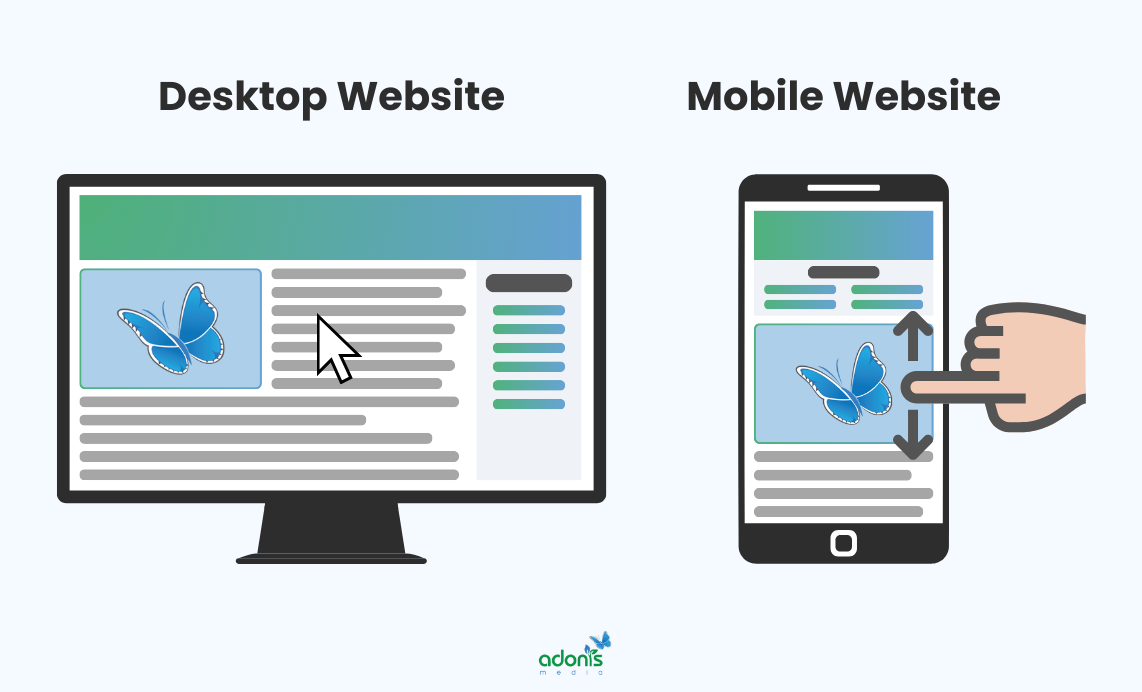
Mobile optimisation ensures your website works smoothly on smartphones and tablets. With more people using mobile devices to browse the internet, having a mobile-friendly website is now essential, not optional.
Mobile optimisation directly impacts your search rankings because Google primarily uses mobile-first indexing. This means that Google looks at your mobile site first when determining rankings.
A poor mobile experience can hurt your SEO efforts and drive away potential customers.
Critical mobile optimisation factors:
- Fast loading speed on mobile networks
- Easy-to-tap buttons and links
- Readable text without zooming
- No horizontal scrolling needed
- Properly sized images
- Mobile-friendly forms and menus
Your mobile website doesn't need to be an exact replica of your desktop version. Instead, focus on providing the best possible experience for mobile users, even if that means simplifying some elements or reorganising content to suit smaller screens.
Test your website regularly on different mobile devices and screen sizes to ensure a consistent experience. Pay special attention to load times and ensure important information is easily accessible on mobile devices.
5. Building Backlinks
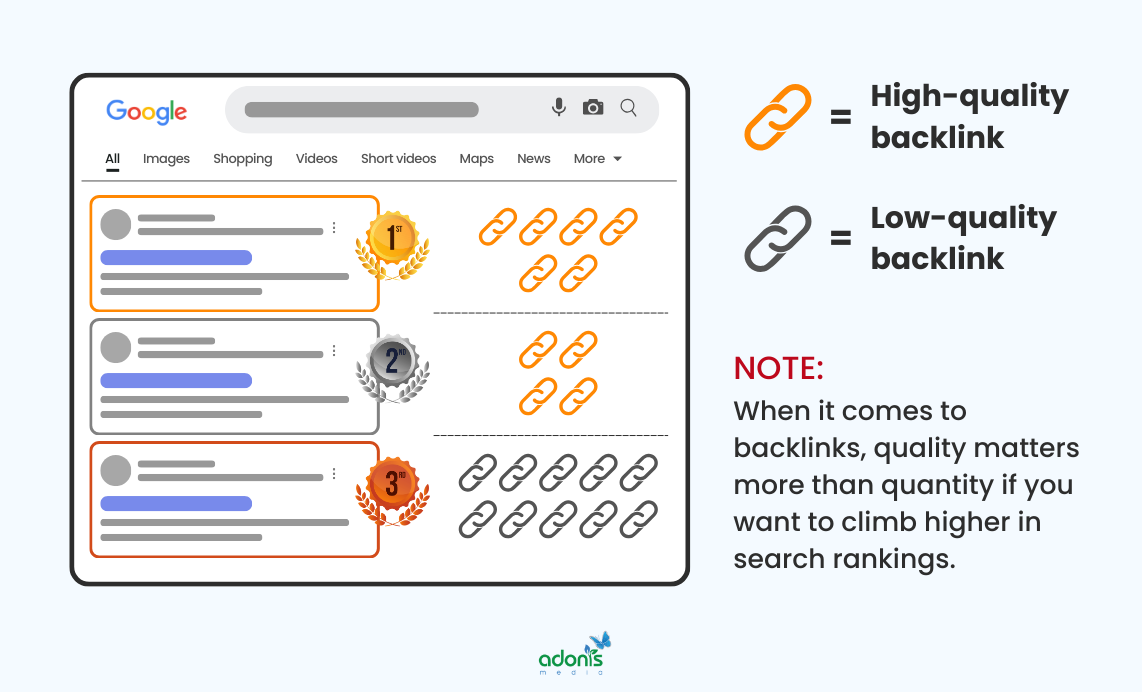
Backlinks are like votes of confidence from other websites to yours. When reputable sites link to your content, it signals to search engines that your website provides valuable information worth sharing.
Building quality backlinks is crucial because they remain one of the top-ranking factors for search engines. Strong backlinks from authoritative websites can significantly improve your search visibility and drive relevant traffic to your site.
Rather than aggressively pursuing backlinks, focus on creating valuable content that naturally attracts links. The best backlinks come from genuine relationships and recognition of your expertise, not from pushy outreach or artificial link-building schemes.
Effective backlink building techniques:
- Creating comprehensive, linkable content
- Guest posting on relevant industry blogs
- Building relationships with industry influencers
- Participating in expert roundups
- Creating original research and studies
- Fixing broken links on other websites
- Getting listed in industry directories
- Creating shareable infographics
- Hosting or sponsoring industry events
- Engaging in community discussions
Additionally, always focus on quality over quantity when building backlinks. A single backlink from a highly authoritative website in your industry can be more valuable than dozens of links from low-quality or irrelevant sites.
Monitor your backlink profile regularly using tools like Ahrefs or Semrush to identify and address any toxic links that could harm your SEO efforts.
The Role of AI in SEO
Our evolving digital landscape has so much to offer, and it includes Artificial Intelligence (AI), which is now reshaping how we approach SEO. AI makes it more efficient and data-driven than ever before.
From understanding user intent to automating technical tasks, AI tools are becoming essential companions in our SEO journey, helping us make smarter decisions and achieve better results.
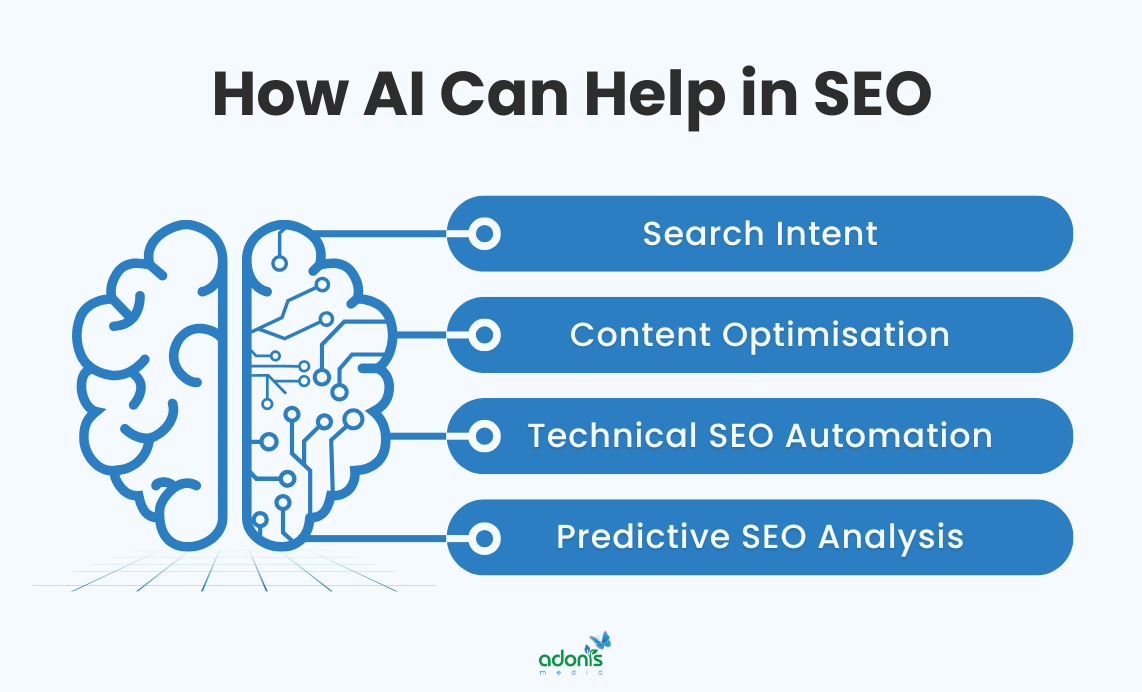
Understanding Search Intent
AI algorithms analyse millions of search queries to understand the context and meaning behind user searches, helping create content that better matches what users are actually looking for. This deep understanding goes beyond keywords to grasp user needs and preferences.
Natural Language Processing (NLP) has transformed semantic search by helping search engines understand context, synonyms, and related concepts. This means content can rank for relevant queries even without exact keyword matches.
AI enables search engines to deliver personalised results based on factors like location, search history, and device type. This personalisation helps users find more relevant content while challenging SEO professionals to optimise for various user segments.
AI-Powered Content Optimisation
AI tools are transforming how we create and optimise content, making the process more efficient and data-driven. These tools analyse top-performing content, user behavior, and search patterns to provide actionable insights.
Content optimisation tools powered by AI can save countless hours of manual work while providing valuable insights into content performance, competitor strategies, and potential opportunities. They help make informed decisions based on real data rather than guesswork.
AI helps create content by analysing data to identify gaps, suggest topic clusters, and generate ideas that align with user searches. This includes optimising metadata, improving readability, and ensuring proper keyword placement.
AI tools can also help with technical aspects like generating meta descriptions, optimising headings, and improving internal linking structures. However, it's crucial to remember that AI should complement, not replace, human creativity and expertise.
While AI can automate many aspects of content optimisation, it's essential to maintain a balance between automation and human oversight. Focus on creating valuable, well-researched content that naturally incorporates relevant keywords while answering your audience's questions.
Technical SEO Automation
AI-powered tools can now automatically scan websites to identify technical issues, saving hours of manual audit work. These tools can quickly crawl through thousands of pages, spotting problems that might affect your search rankings.
Continuous performance monitoring through AI helps track crucial metrics like page speed, mobile responsiveness, and Core Web Vitals in real-time. This allows for quick identification and resolution of issues before they impact rankings.
AI systems can automatically detect and sometimes fix common technical SEO issues, such as broken links, missing meta tags, and duplicate content. This proactive approach helps maintain optimal website health.
Smart algorithms can now automatically generate and implement structured data markup, helping search engines better understand your content and potentially earn rich snippets in search results.
Predictive SEO Analysis
Trend forecasting uses AI to analyse historical data and current patterns, helping predict which topics and keywords will gain popularity. This allows businesses to create content ahead of trends, positioning themselves as early authorities.
AI-powered competitor analysis tools continuously monitor your competitors' SEO strategies, content performance, and keyword rankings. This helps identify opportunities and gaps in your own SEO strategy that you might have missed.
Traffic prediction algorithms analyse seasonal trends, market changes, and user behavior patterns to forecast future website traffic. This helps in planning content calendars and resource allocation more effectively.
AI tools can now assess the ranking potential of your content before publication by analysing factors like keyword difficulty, competition strength, and content quality compared to top-ranking pages.
SEO Tips and Best Practices
These tips and best practices sound redundant to you, but we want to emphasise them since they are essential for SEO in the long run.
Create High-Quality Content
When your content truly helps people, search engines notice and reward your website with better rankings.
While keywords help search engines understand your content, focus on creating articles that genuinely solve your audience's problems.
You may start with 'what is' guides for beginners, 'how to' tutorials for practical advice, and comprehensive lists or list articles that provide value. This approach naturally incorporates relevant keywords while keeping readers engaged.
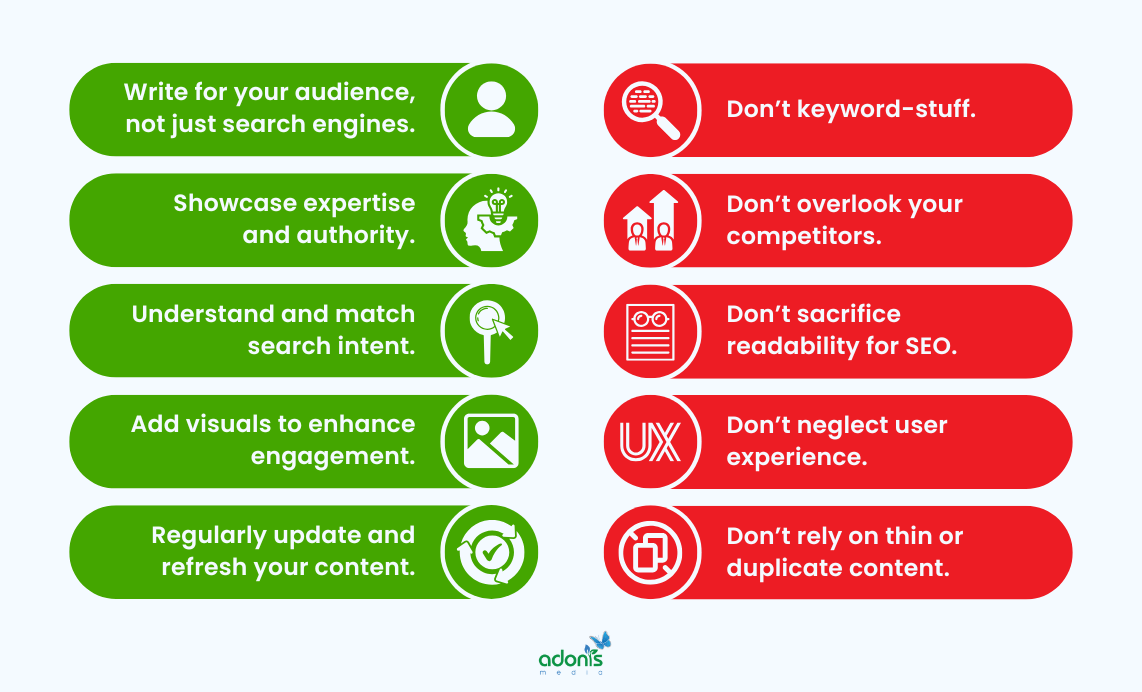
Do's for content optimisation:
- Write for your audience, not just search engines.
- Showcase expertise and authority.
- Understand and match search intent.
- Add visuals to enhance engagement.
- Regularly update and refresh your content.
Don'ts for content optimisation:
- Don't keyword-stuff.
- Don't overlook your competitors.
- Don't sacrifice readability for SEO.
- Don't neglect user experience.
- Don't rely on thin or duplicate content.
Get the Right SEO Tools
Having the right SEO tools is like having a skilled team of assistants helping you make data-driven decisions. These tools provide insights, track performance, and identify opportunities you might otherwise miss.
Essential SEO tools for success:
- Google Search Console: Free tool for monitoring search performance and technical issues
- Google Analytics: Tracks website traffic, user behaviour, and conversion data
- Semrush: Comprehensive suite for keyword research, competitor analysis, and site audits
- Ahrefs: Powerful backlink analysis and content research platform
- Screaming Frog: Technical SEO audit tool for crawling websites
- Moz Pro: All-in-one SEO toolset with domain authority metrics
- Yoast SEO: WordPress plugin for on-page optimisation
- Ubersuggest: Budget-friendly option for keyword research
- Answer the Public: Tool for discovering question-based keywords
- GTmetrix: Website speed and performance analysis tool
Get or Be an SEO Specialist
Having expert SEO guidance is crucial because search engines constantly evolve, and staying competitive requires deep knowledge of best practices, algorithm updates, and proven strategies. An SEO specialist can help avoid costly mistakes and implement effective strategies from day one.
If you're considering becoming an SEO specialist for your company, know that the learning curve might be steep initially. However, developing these skills can provide long-term benefits, which will give you complete control over your SEO strategy and save money on outsourcing.
Essential SEO skills and knowledge areas:
- Technical SEO fundamentals
- Content optimisation techniques
- Keyword research and analysis
- Analytics and data interpretation
- Link building strategies
- User experience principles
- Mobile optimisation
- Local SEO practices
- Algorithm understanding
- Performance tracking and reporting
Be Updated with SEO Changes
SEO also evolves. What worked yesterday might not work today, and tomorrow might bring entirely new opportunities.
Keeping up with SEO changes is vital because search engines regularly update their algorithms to provide better search results. These updates can significantly impact your website's visibility, making it essential to adapt your strategies accordingly.
Google's E-E-A-T (Experience, Expertise, Authoritativeness, and Trustworthiness) has transformed how we approach SEO. It emphasises the importance of demonstrating genuine expertise and first-hand experience in your content, moving beyond just technical optimisation to focus on content quality and credibility.
Important SEO changes to monitor:
- Core algorithm updates
- Mobile-first indexing developments
- Page experience signals
- AI and machine learning integration
- Voice search optimisation
- Featured snippet opportunities
- Local SEO modifications
- Schema markup updates
- Privacy and security requirements
- User behaviour trends
Measure and Track SEO Success
Measuring SEO success is crucial since it helps justify your investment and guides future strategy decisions. Without proper tracking, you're basically working in the dark, unable to determine if your efforts are actually improving your online presence.
While SEO provides long-term organic growth, combining it with paid advertising can deliver quick wins while your organic rankings build. This helps maintain visibility during the early stages of SEO implementation and can provide valuable data about your target audience.
Key Performance Indicators (KPIs) to track:
- Organic traffic growth
- Keyword rankings for target terms
- Conversion rates from organic traffic
- Page load speed metrics
- Bounce rate and time on site
- Click-through rates from search results
- Domain and page authority
- Backlink quality and quantity
- Local search visibility
- Mobile traffic performance
Further Learning
Looking to learn more? I've collected some fantastic resources that go hand-in-hand with this topic if you want to dive deeper.
- developers.google.com — Google Search's guidance about AI-generated content
- developers.google.com — Creating helpful, reliable, people-first content
- developers.google.com — Our latest update to the quality rater guidelines: E-A-T gets an extra E for Experience
- linkedin.com — SEO vs AEO: Understanding the Key Differences and Their Impact on Digital Success
- forbes.com — The Future Of SEO Is Answer Engine Optimization (AEO)
- forbes.com — An Abbreviated History Of SEO And What It Tells Us About SEO's Future Role
- searchenginejournal.com — 20+ Years of SEO: A Brief History of Search Engine Optimization
- ahrefs.com — 124 SEO Statistics for 2024
- rivalmind.com — How to Measure the ROI of SEO
- aicontentfy.com — The Importance of User Experience in SEO and How to Optimize It
Take Your Website to the Top
SEO isn't about satisfying search engines like before. By focusing on quality content, technical excellence, and user experience, you're not only improving your search rankings but building a stronger, more sustainable online presence that grows with your business.
Remember, SEO is a marathon, not a sprint. The effort you put in today continues to pay dividends long into the future.
Need help implementing these SEO strategies for your business? Book a free consultation with our team of SEO experts. We'll analyse your current SEO performance and create a customised strategy to boost your online visibility.
Got a question in mind? Check out the FAQs below for quick answers!
