
Most B2B brands struggle to build trust and reach the right decision-makers. Traditional ads feel pushy and often get ignored by busy professionals who value authentic recommendations.
Your competitors are already partnering with industry experts who have loyal followings. While you're spending thousands on ads that barely convert, they're building genuine relationships and seeing real results through trusted voices.
Influencer marketing changes the game for B2B brands. This guide shows you how to find the right influencers, build authentic partnerships, and create campaigns that actually drive leads and sales.
Key Takeaways
- Influencer marketing is about partnering with trusted online personalities to promote your brand in a genuine, relatable way.
- B2B brands benefit from influencer marketing by building trust, reaching niche audiences, and creating high-quality, shareable content.
- Influencer marketing and celebrity endorsement are not the same; influencers connect with niche audiences, while celebrities offer broad but less targeted reach.
- Influencer marketing is often more authentic and cost-effective, while celebrity endorsements can be expensive and feel less personal.
- Nano and micro-influencers suit small businesses or niche B2B brands, while macro and celebrity influencers fit larger brands seeking broad exposure.
- A strong influencer marketing strategy includes clear objectives, audience research, careful influencer selection, and a well-planned budget.
- Success depends on giving influencers creative freedom, tracking campaign results, and optimising your approach for future projects.
- Always use contracts, set clear guidelines, and keep communication open to get the best results from your influencer partnerships.
What Is Influencer Marketing?
Influencer marketing is an approach wherein a business partners with someone, specifically influencers, who have a loyal fan base or followers online to promote its products or services in a genuine way.
It works when a business teams up with an influencer, who then shares content about them and something they want to post on their social media channels, such as Instagram, YouTube, LinkedIn, or TikTok. This content can be a review, a story, or even a brief mention, and it's designed to spark interest and encourage conversation.
Influencers can be industry experts, thought leaders, or everyday people who have built trust and credibility in a certain niche. Their followers value their opinions, which gives their recommendations real weight.
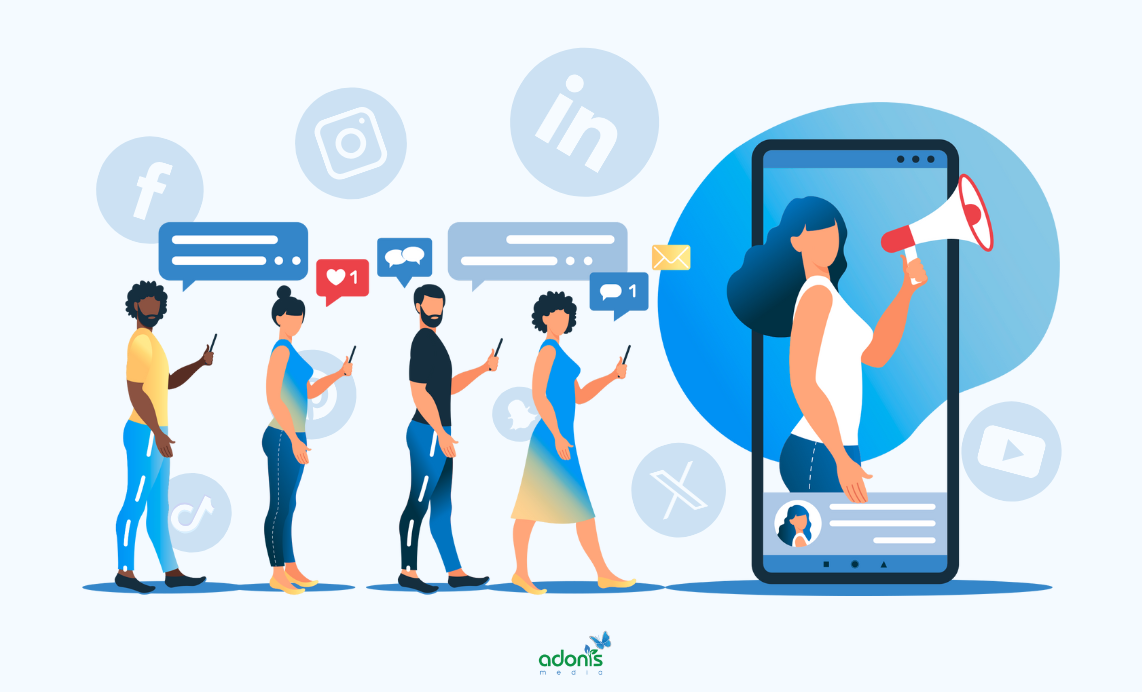
Influencer marketing is considered a part of social media marketing, as influencers use their social platforms to connect with their audience. Brands can tap into these ready-made communities for more targeted and authentic engagement.
Many brands have been using influencer marketing since people trust other people more than they trust ads. When an influencer talks about a brand, it feels like a recommendation from a friend or someone who represents their authentic experience with a product or service.
In the B2B world, influencer marketing is gaining ground. Businesses work with respected voices in their industry to share insights, review products, or host webinars. It's about building authority, nurturing leads, and making complex products or services more relatable and trustworthy to other businesses.
Benefits of Influencer Marketing for B2B
Influencer marketing is effective for B2B brands because it adds a human touch to business relationships, fosters trust more quickly, and helps you gain visibility with the right people in your industry.
Those are just a few reasons. There are other benefits when you embrace influencer marketing in your business.
Builds Trust and Credibility
Influencer marketing does it by letting respected industry experts vouch for your brand. Their followers have already seen them as reliable sources, so their endorsement carries real weight.
In fact, 75% of decision-makers trust a brand more if it is associated with industry experts or influencers, which is a significant boost in credibility that you can't achieve through traditional ads.
You're borrowing the influencers' reputation when you partner with them, and they can't put it at risk. Their audience knows it, so your business benefits from that trust.
Reaches Niche Audiences
Influencers are experts at reaching niche audiences because they've built their fan base around specific interests or industries. If you're in a specialised B2B sector, there's a big chance that a number of influencers speak directly to your ideal clients.
People are naturally drawn to the influencers they follow. Getting the right one who matches your niche means your brand message lands in front of people who care.
Enhances Content Quality
Influencers are natural content creators. They know how to make engaging posts, videos, and stories that grab attention and keep people interested.
They can think of a way to introduce your brand to their audience and yours that you haven't thought of yet, and it often aligns very well with your brand, which might make your campaigns feel less like ads.
Working with influencers also means you get access to high-quality, shareable content that you can reuse across your own marketing channels. It's a win-win for both content and reach.
Boosts Audience Engagement
Influencers are always active on social media, chatting with their followers and responding to comments. When your brand works with them, this is already a bonus.
Besides high engagement, working with influencers also expands your reach. Their followers are more likely to interact with posts, ask questions, and share content, which helps your brand gain notice from even more potential clients.
Cost-Effective Marketing
The cost of influencer marketing depends on two main things: the type of influencer you choose and the size of your business. Nano and micro-influencers usually charge less, while bigger names ask for more. Your brand's reputation and campaign goals also play a part in what you'll pay.
If you find the right influencer using these factors, you'll quickly see how this kind of marketing can make a difference, even with small campaigns. Compared to traditional advertising, influencer marketing often delivers better results for less money, especially when you're targeting a specific audience.
Influencer Marketing vs Celebrity Endorsement: What's the Difference?
Some people and brands think influencer marketing is just another term for celebrity endorsement. But the truth is, these two are different in many ways and offer unique advantages for brands.
Let's break down the differences and see which one best fits your goals.
Key Difference
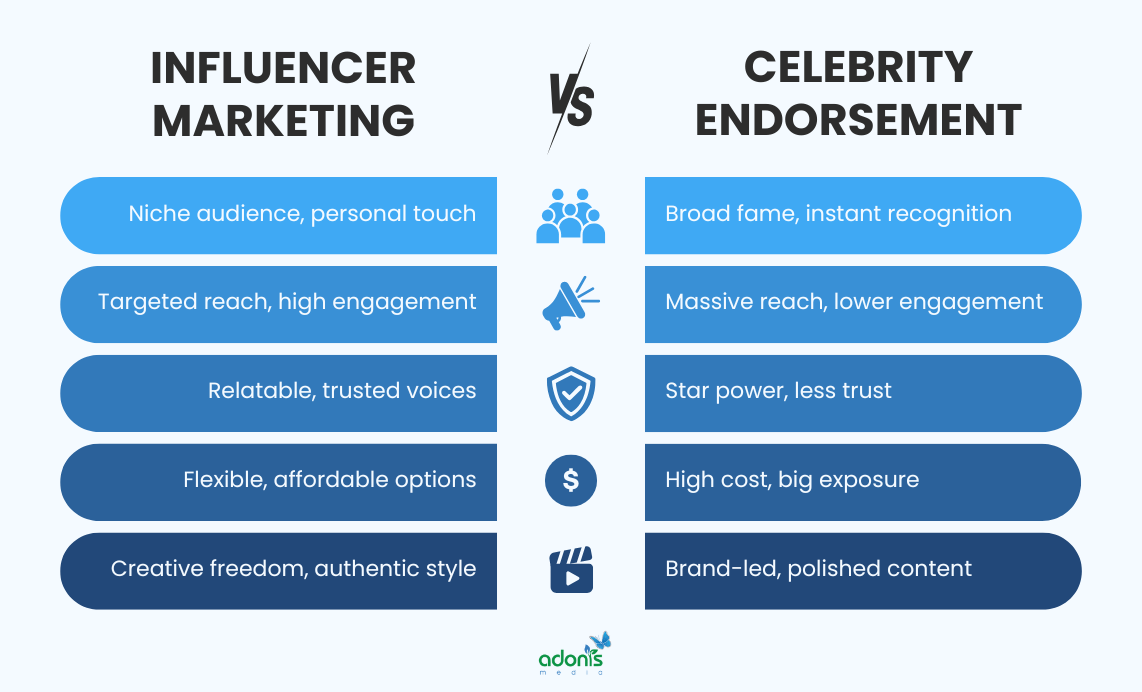
Influencer marketing is all about partnering with individuals who have built a loyal, niche audience online. These influencers are trusted for their expertise or passion in a specific area, and they create content that feels personal and relatable to their followers.
Celebrity endorsement, on the other hand, means working with well-known public figures — like actors, athletes, or musicians — who have massive fan bases. Their main strength is instant recognition and the ability to give your brand a big boost in visibility, often on a national or global scale.
To be precise and avoid confusion, celebrities can become instant influencers because of their fame and large following, which we call celebrity influencers, but most influencers aren't celebrities. Influencers usually build their audience around a niche, while celebrities gain influence through mainstream recognition and popularity.
Audience Reach and Engagement
Influencer marketing gives you access to highly targeted audiences. Influencers usually have followers who share specific interests. This often leads to higher engagement, with more likes, comments, and shares because the content feels relevant and personal.
Celebrity endorsement brings broad reach. However, engagement rates are usually lower, as their followers may not all be interested in your product or niche. It can feel more distant, and the content might not spark as much conversation.
Authenticity and Trust
Influencer marketing stands out for its authenticity. Followers see influencers as real people with genuine opinions, so when they recommend a brand, it feels honest and relatable.
Celebrity endorsement is a bit different. While celebrities have star power, their promotions can feel more scripted or commercial. People know celebrities are paid for endorsements, so the trust factor isn't always as strong as with influencers.
Cost
The cost of influencer marketing varies a lot depending on the influencer's type and their audience reach. Nano and micro-influencers are typically more affordable, while larger influencers incur higher costs due to their wider reach.
On average, you might pay anywhere from $100 to $500 for a post from a nano-influencer and up to $5,000 or more for a macro-influencer. Rates depend on platform, content type, and campaign length.
The cost for celebrity endorsement also varies, mostly based on the celebrity's popularity and global recognition. Big names can command huge fees, especially for major campaigns.
A celebrity endorsement can range from $20,000 to $500,000 or even more for a single campaign. The price reflects the instant exposure and star power they bring, but it's a massive investment.
Media and Content Control
With influencer marketing, brands usually give influencers creative freedom to craft content in their own style, so it makes the message feel natural and fits the influencer's usual tone. While you can set guidelines, the influencer's personal touch is what really connects with their audience.
Celebrity endorsement is more controlled by the brand. The message, visuals, and even the script are often decided by the marketing team. Celebrities usually follow a set brief, so the content can feel polished, but sometimes less personal or engaging to viewers.
Types of Influencers Based on Followers
Influencers come in all shapes and sizes. Choosing the right type can make a really big difference for your brand, whether you want deep engagement or massive reach.
Nano-Influencers
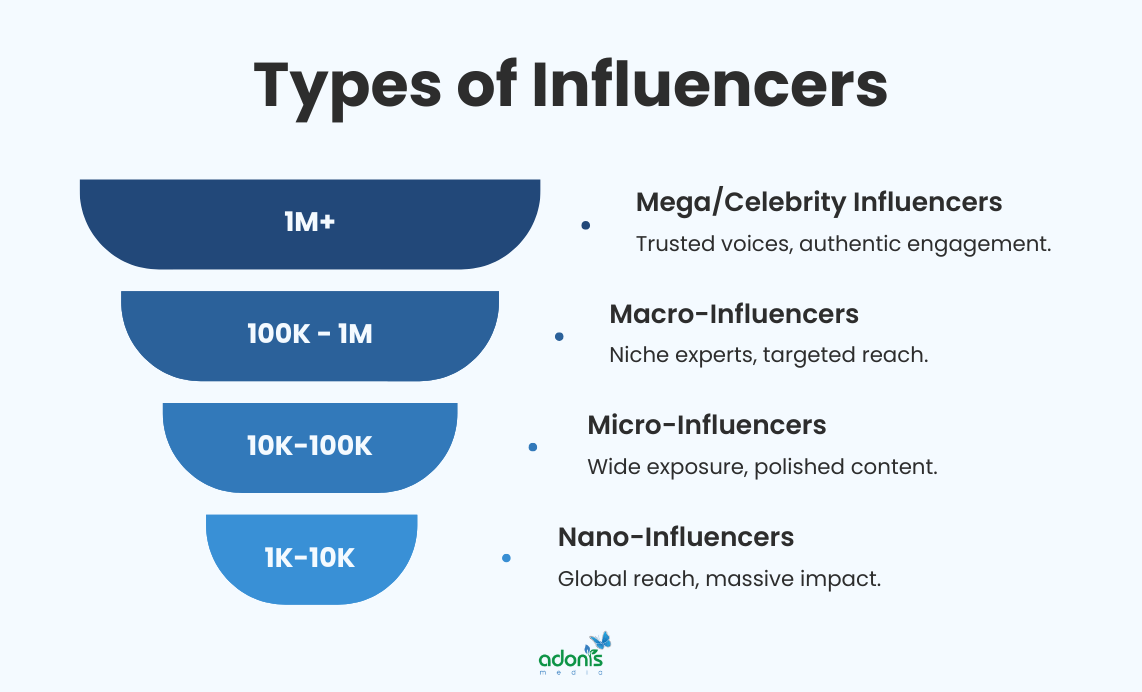
Nano-influencers usually have between 1,000 and 10,000 followers. They tend to build strong, personal connections with their audience.
Their recommendations feel like advice from a friend, not a sales pitch, and their engagement rates are often the highest among all influencer types. People trust their opinions because they're relatable and approachable.
Nano-influencers are a perfect fit for local businesses, small B2B brands, or those with a tight budget. If you want to target a specific community or niche, or if you're just starting out and need authentic engagement, nano-influencers are your best choice.
Micro-Influencers
Micro-influencers have between 10,000 and 100,000 followers. They're known for their genuine content, high engagement, and deep expertise in a particular niche, like SaaS, cybersecurity, or marketing tech.
Micro-influencers are ideal for B2B brands that want to reach a targeted, professional audience without breaking the bank. They're handy for companies looking to build credibility in a specific industry or for startups wanting to create buzz around a new product.
Macro-Influencers
Macro-influencers have follower counts ranging from 100,000 to around a million. They're skilled at producing polished content and can get your brand in front of a much larger audience. Their posts often spark engagement and can quickly boost your brand's visibility in your sector.
Macro-influencers are a great fit for established B2B companies looking to scale up or launch a new service to a broader market. This is a good option if your goal is to make a big splash or reach decision-makers across industries.
Mega/Celebrity Influencers
Mega or celebrity influencers have over a million followers, sometimes even tens of millions. They can put your brand in front of a global audience in no time. But just a warning: be ready for the price tag.
These influencers suit large B2B brands with significant budgets, especially those aiming for international recognition or launching a major campaign. If you are one of those big tech firms or companies wanting to make a statement at global events, go for these influencers.
Influencer Marketing Strategy
You have already learned everything about influencer marketing and its types. Now, it's time to put that knowledge into action and build a strategy that really works for your brand. Here's how to get started, step by step.
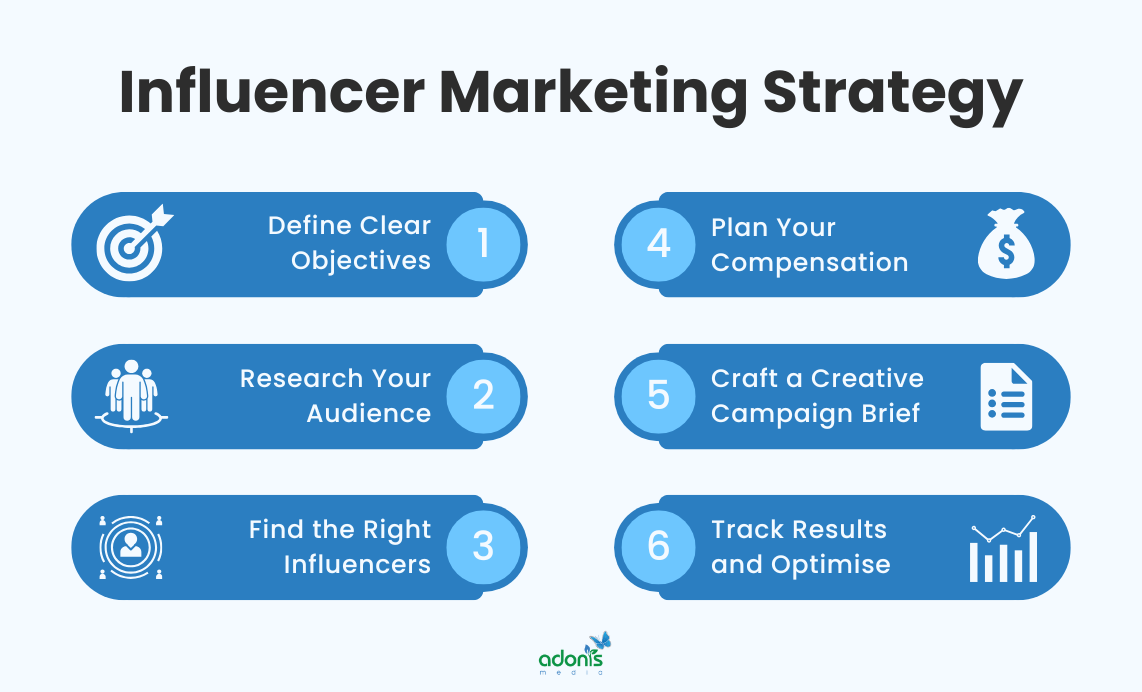
1. Define Clear Objectives
Setting clear objectives is the first step to any successful influencer marketing campaign or any marketing campaign.
Start by deciding what you want to achieve with the influencer's help. Do you want to boost brand awareness, drive website traffic, generate leads, or increase sales? Be specific about your goals.
For example, your objective could be: "Generate 200 qualified leads from LinkedIn through influencer partnerships in the next three months."
Clear goals like this make it easier to plan your campaign and track progress.
Don't forget to define your KPIs (Key Performance Indicators). These could include engagement rates, reach, website visits, or conversions. Agree on these metrics with your influencer so you're both working towards the same results, and all are data-driven.
2. Research Your Audience
If you haven't researched your target audience, you're basically flying blind. Knowing who you want to reach is key before you even think about picking an influencer.
Dig into your audience's interests, job roles, industry, and which platforms they use most. All your efforts will help you create messages that actually speak to them.
You need to know your audience well in the long run, as this will be your basis for checking if an influencer's followers match your ideal clients.
For B2B, assume you're a software company wanting to reach IT managers in Australia. You'd look for influencers who share tech tips, review business software, and have a following of professionals in the right region and industry.
3. Find and Vet the Right Influencers
To find the right influencer, start by looking at your business scale, your current budget, and the type of influencer you want to work with.
If you're a small business, you might want to focus on nano or micro-influencers who are more affordable and have a closer connection with their followers.
Check your current budget before jumping into influencer marketing. Make sure you know how much you're willing to spend, as this will affect the size and type of influencer you can approach.
Your budget is essential as it determines whether you can work with a nano, micro, macro, or even celebrity influencer. Bigger budgets open more doors, but smaller budgets can still get great results with the right fit.
For finding influencers in Australia, try platforms like Tribe, Scrunch, or even searching LinkedIn and Instagram using relevant hashtags. These tools help you filter by location, industry, and engagement rates.
You can also reach out directly to influencers you already know or admire. Just send them a DM (direct message) on their socials or use their listed email or contact form. Most influencers are open to brand collaborations and will let you know their process.
4. Plan Your Budget and Compensation
Decide upfront how much you'll spend and how you'll pay your influencers, whether a flat fee, free products or services, or a mix of both.
You can also consider adding performance bonuses if you want to reward influencers for hitting certain targets, like extra leads or higher engagement rates. It's a good way to motivate them.
Plus, always create contracts that outline payment terms, deliverables, timelines, and content rights. Most of the time, the influencer is the one to decide, especially for the payment terms, but it's negotiable.
5. Craft a Creative Campaign Brief
Give influencers clear brand guidelines so they know your tone, values, and what's off-limits. It will keep them remembering that your messaging needs to be consistent. It's important to set these rules early so your brand doesn't get lost or mixed up in the campaign.
Share your campaign goals, such as boosting brand awareness or generating leads. Make sure these goals are realistic and tied to your overall marketing strategy.
If you've already given them everything they need to know, let your influencer have some creative freedom. Trust their style — they know what works with their audience. You can always review and tweak content during the process if needed.
6. Track Results and Optimise
You can monitor how your campaign performs by reviewing data from the built-in analytics tools on your chosen platform. Look at metrics like reach, engagement, clicks, and conversions to see what's working.
Also, optimise your approach based on what the data tells you. Discuss results with your influencer, and use these insights to improve your next campaign or ongoing projects together.
Keep refining your strategy. Small changes, like adjusting posting times or content formats, can make a big difference in results over time. Always aim to learn and grow with each campaign.
Further Learning
Looking to learn more? I've collected some fantastic resources that go hand-in-hand with this topic if you want to dive deeper.
- digitalmarketinginstitute.com — 20 Surprising Influencer Marketing Statistics
- statista.com — Influencer marketing worldwide - statistics & facts
- shopify.com — Nano-Influencer Marketing: How To Work With Nano-Influencers (2025)
- forbes.com — Why You Shouldn't Overlook LinkedIn Influencer Marketing Anymore
- ewadirect.com — The Key Factors That Drive Influencer Marketing Effective
- reddit.com — Reddit r/marketing Thread: "Thinking about influencer marketing, but does it actually work?...."
- reddit.com — Reddit r/marketing Thread: "Has anyone used Nano Influencers on Instagram before?"
- reddit.com — Reddit r/influencermarketing Thread: "Best way to find micro-influencers?”
Unleash The Influencer Effect
Influencer marketing offers a fresh way to build trust, connect with niche audiences, and create authentic content that resonates. It's cost-effective and delivers better engagement than many traditional methods. Whether you're a small startup or a large B2B brand, influencer marketing can help you stand out and grow.
Ready to take your brand to the next level? Book a free consultation with us today, and let's craft an influencer marketing strategy tailored just for you. We'll help you find the right voices and make your campaign a success.
Got a question in mind? Check out the FAQs below for quick answers!
